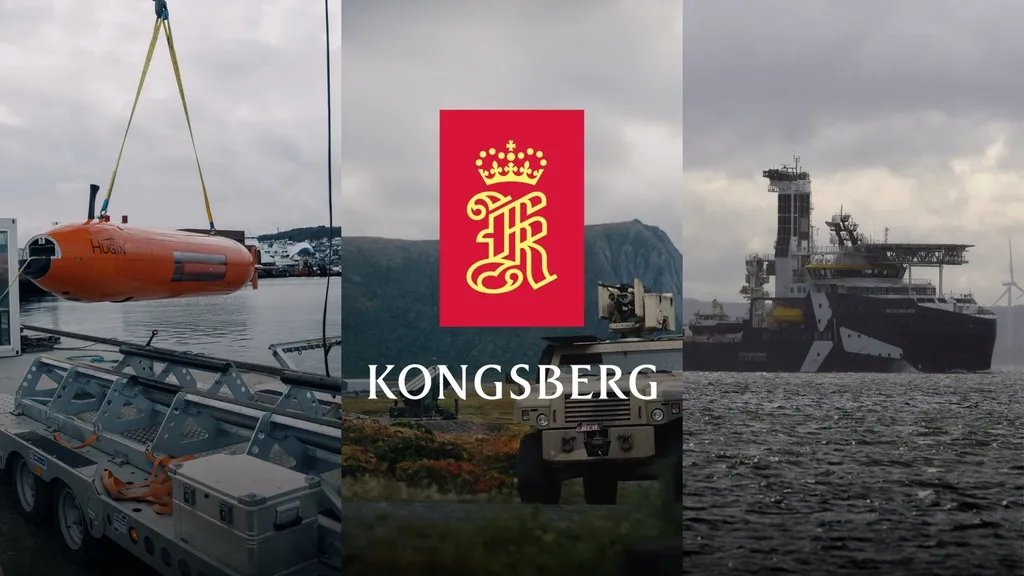
Kongsberg Gruppen ASA has quietly become one of Europe’s most strategically important defense and maritime technology groups. Its integrated systems are reshaping the battlefield and the balance sheet. The Silent Powerhouse Behind Modern Defense and Maritime Tech Kongsberg Gruppen ASA is not a single product in the way an iPhone or a Model Y is; it is a tightly integrated portfolio of mission-critical systems that increasingly behave like one coherent platform. From precision strike missiles and remote weapon stations to naval combat management, autonomous underwater vehicles, and digital twin software for offshore operations, Kongsberg Gruppen ASA has evolved into a systems ecosystem that quietly underpins NATO capabilities and global maritime trade. As defense budgets surge and geopolitical tensions harden, the problem Kongsberg Gruppen ASA is solving has never been clearer: how do you build reliable, interoperable, and upgradeable systems that give militaries and maritime operators a decisive edge without locking them into fragile, bespoke technology? Kongsberg’s answer is to treat everything—from missiles to maritime simulators—as part of a modular, software-heavy architecture that can be networked, updated, and scaled. This approach has turned Kongsberg from a regional industrial player into a strategic supplier whose products sit at the intersection of defense, autonomy, and maritime digitalization. It is exactly this systems mindset that global investors are now pricing into Kongsberg Aktie. Get all details on Kongsberg Gruppen ASA here Inside the Flagship: Kongsberg Gruppen ASA To understand Kongsberg Gruppen ASA as a “product”, you need to see it as a layered technology stack rather than a single piece of hardware. The group is structured into three main business areas—Kongsberg Defence & Aerospace, Kongsberg Maritime, and Kongsberg Discovery—but the real story is how these areas share technology, software, and systems engineering DNA. Defense & Aerospace: Precision, Range, and Interoperability In the defense domain, the standout products include the Naval Strike Missile (NSM), the Joint Strike Missile (JSM), and the PROTECTOR Remote Weapon Station (RWS). These products are emblematic of what defines Kongsberg Gruppen ASA today: modular systems engineered for NATO interoperability, high survivability, and long-term upgradability. The NSM is a fifth-generation, sea-skimming, precision strike missile designed for complex littoral environments. Key characteristics include: Stealthy design with low radar signature and passive imaging infrared seeker High subsonic speed with advanced sea-skimming profile and terminal evasive maneuvers Long range (commonly cited in the 185+ km class, with upgraded versions extending further) High target discrimination and ability to navigate cluttered coastal environments Its air-launched sibling, the JSM, is optimized for internal carriage on the F-35, giving fifth-generation fighters a deep-strike, stand-off anti-surface capability that fits seamlessly into the stealth jet’s weapons bay. That pairing—Kongsberg missile, Lockheed Martin platform—has turned Kongsberg Gruppen ASA into a critical part of the F-35 weapons ecosystem. Then there is the PROTECTOR RWS, the world’s most widely fielded remote weapon station family. It allows crews to operate weapons from within the safety of an armored hull, while integrating day/night sensors, fire control, and network connectivity. Over time, PROTECTOR has expanded into a scalable family that can mount everything from 12.7 mm machine guns to anti-tank guided missiles, and can be integrated on vehicles, vessels, and static platforms. The common thread: these products are less about single-use hardware and more about plug-and-play, network-capable combat modules that can be adapted to multiple platforms and doctrines. Maritime & Discovery: Digital Oceans and Autonomous Operations On the maritime side, Kongsberg Gruppen ASA shines through Kongsberg Maritime and Kongsberg Discovery, which deliver integrated systems for commercial shipping, offshore energy, and underwater operations. Flagship capabilities include: Vessel automation and bridge systems – integrated navigation, dynamic positioning, propulsion control, and automation for commercial vessels and offshore rigs. Autonomous and remotely operated vessels – Kongsberg technology underpins several high-profile autonomous ship projects and testbeds, with a heavy focus on software, sensors, and control systems. Underwater robotics – autonomous underwater vehicles (AUVs), remotely operated vehicles (ROVs), and advanced sonar systems that map the seafloor, inspect subsea infrastructure, and support defense anti-submarine warfare missions. Digital twins and simulation – software platforms that replicate ships, offshore installations, and entire operations in a virtual environment to optimize performance, training, and maintenance. As the shipping industry faces decarbonization mandates and razor-thin margins, Kongsberg Gruppen ASA positions its maritime offerings as an end-to-end digital stack: navigation, propulsion, automation, and analytics, all tied together by real
Kongsberg Gruppen ASA: Europe’s Silent Defense and Maritime Tech Powerhouse