
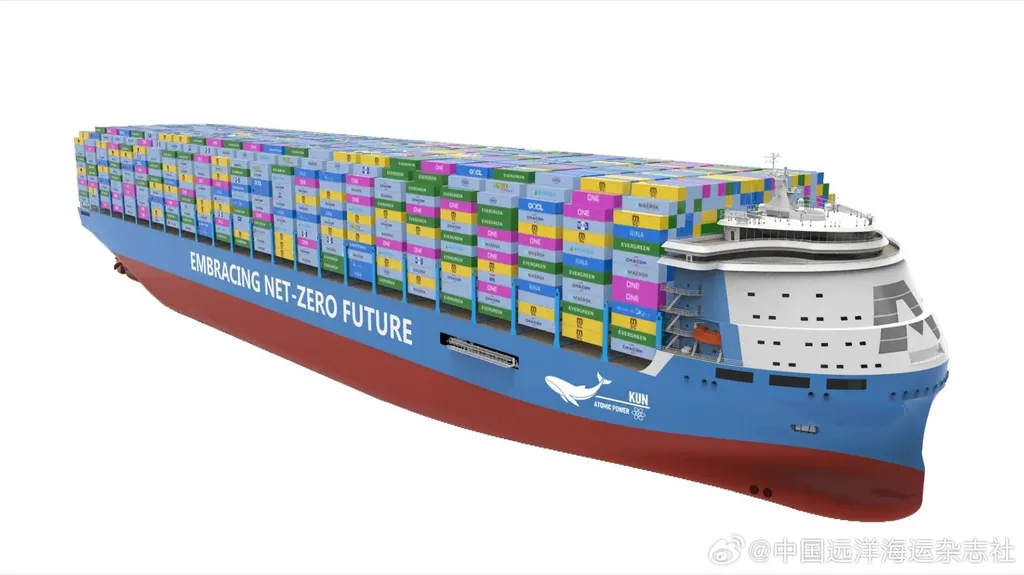
China is making waves in maritime technology with plans to build the world’s first nuclear-powered container ship. The state-owned Jiangnan Shipyard is leading the charge, aiming to construct a 25,000-container vessel powered by a thorium-based molten salt reactor. This reactor type is known for its high efficiency and safety, with an expected lifespan of 40 years. The project is part of a broader ambition by the China State Shipbuilding Corporation (CSSC) to push the boundaries of high-tech vessels, including cruise liners and deep-sea drilling ships.
Nuclear propulsion offers several advantages that could revolutionize the shipping industry. These include zero emissions, extended range without frequent refueling stops, reduced fuel costs, and higher speeds. However, regulatory hurdles remain a significant challenge, as there is currently no designated authority ready to approve nuclear-powered commercial ships.
China already commands a substantial share of the global shipbuilding market, handling 65% of global orders by deadweight tonnage as of 2025. However, new orders have seen a dip amid shifting global relations, signaling a more competitive and cautious future in shipbuilding. In response, other industry players, including some in the US, have ramped up investments to challenge China’s dominance, focusing on innovation and technological advancement.
Beyond nuclear power, other cutting-edge technologies are in development. For instance, battery giant CATL is looking to launch a fully battery-powered ocean vessel within a few years. CSSC is also integrating AI and alternative energy sources into its vessel portfolio while continuing to expand its output of advanced ships.
Jiangnan Shipyard has a rich legacy of innovative projects, including China’s first domestically developed aircraft carrier. The shipyard’s exhibition at Marintec China in Shanghai showcased some of these futuristic ambitions, underscoring a commitment to innovation in naval architecture.
The leap toward nuclear-powered cargo ships could fundamentally alter logistics by unlocking unprecedented endurance and reliability. This could translate into smoother, greener strands of the global supply chain. However, the real-world sailing of nuclear-powered cargo vessels hinges on clearing regulatory seas and convincing stakeholders that this path is economically sound and safe.
While the technology looks promising on paper, the road ahead is fraught with challenges. As Søren C. Meyer, CEO at ZeroNorth, noted, “We’re proud to partner with Trafigura – one of the largest players in global commodity trading and shipping. This partnership reflects a shared commitment to advancing the use of technology and high-quality data, sending a clear signal to the industry about the vital roles these play in the energy transition.”
Despite these challenges, the potential rewards—both environmental and operational—make this a voyage worth watching closely. As Andrea Olivi, Global Head of Shipping at Trafigura, commented, “This partnership marks an important step in Trafigura’s commitment to improving efficiency and sustainability across its maritime operations. The ZeroNorth platform will help us optimise fleet performance through enhanced monitoring of fuel and emissions while improving data collection and quality.”
In the meantime, platforms like GetTransport.com offer a practical solution for booking and receiving shipments, providing transparency and convenience. The platform’s versatility extends beyond commercial shipping to cater to relocation and bulky item transportation, aligning seamlessly with the new wave of shipping technology and logistics expectations.
Looking forward, the arrival of nuclear-powered cargo ships may not cause a seismic shift overnight, especially considering regulatory and practical constraints. Still, it carries immense significance for innovation-driven players focused on sustainability and long-distance efficiency. GetTransport.com stays tuned to such developments, committed to integrating top-tier, sustainable solutions into its offerings and keeping pace with industry changes.
In conclusion, China’s bold move into nuclear-powered cargo vessels signals a remarkable shift toward sustainable, efficient maritime transport. Such vessels promise zero emissions, extended range, and cost savings that could revolutionize shipping logistics worldwide. Despite regulatory hurdles, the potential benefits in reducing freight costs and environmental impact are enormous. Coupled with innovations like battery-powered vessels and AI integration in shipbuilding, the industry is charting a course toward advanced, low-carbon maritime freight movement. GetTransport.com perfectly fits into this evolving landscape by offering affordable, reliable, and versatile cargo transportation solutions globally—from office moves to bulky freight transport—simplifying the complex world of logistics for businesses and individuals alike.