
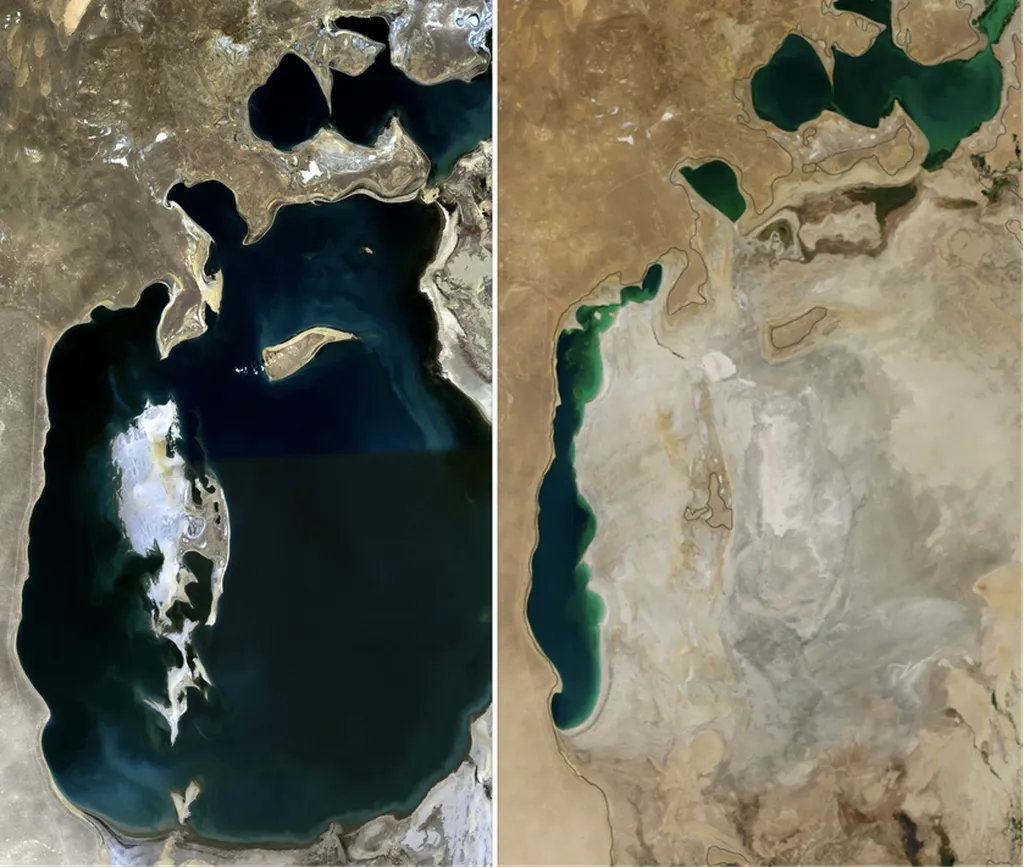
Cadet Mohd Emaad Khan is embarking on a mission to uncover the lessons marine professionals can learn from one of the world’s most catastrophic ecological collapses. Awarded the David Henderson Inspiring Journey grant by the Institute of Marine Engineering, Science and Technology (IMarEST), Emaad will traverse Uzbekistan’s Aral Sea basin, a region that has seen the once fourth-largest inland sea shrink to less than half its former size due to climate change and mismanagement.
This July, Emaad will set out on his journey to tell the complicated water story in the region and gather important information for the next generation of marine professionals. Starting from Charvak Reservoir near Tashkent, the capital of Uzbekistan, he will share his insights through a video series and social media updates. At the reservoir, Emaad will examine how modern water management creates artificial maritime environments, offering a glimpse into the delicate balance between human intervention and natural ecosystems.
From there, he will journey to Samarkand, a historic city where Silk Road traders once relied on water routes for global commerce. This leg of the expedition will highlight the historical significance of waterways in trade and commerce, providing a lens through which to view the impact of environmental changes on economic activities.
Following the Amu Darya River, Emaad will document how this once-mighty artery sustained the Aral Sea but now struggles under the demands of agriculture. The river’s journey from its source to its eventual contribution to the Aral Sea will be a focal point, illustrating the broader implications of water resource management and the delicate balance required to sustain both ecosystems and human livelihoods.
In Khiva, Emaad will explore how this oasis city adapted to shifting water availability, offering lessons in resilience and survival. The city’s history of adapting to environmental changes will provide valuable insights into how communities can respond to similar challenges in the future.
The journey will lead him to Moynaq, a poignant location home to ship graveyards where rusting vessels lie stranded in desert sands. Here, Emaad will engage with former fishing communities whose maritime livelihoods vanished within a generation. The stark contrast between the thriving maritime past and the current desolation will underscore the profound impact of ecological collapse on human communities.
Emaad’s journey will conclude at Aydarkul Lake, an artificial body of water created from redirected drainage, a new lake born from the death of another. This final stop will highlight the innovative but often controversial methods used to manage water resources in the face of environmental degradation.
“This expedition is more than just a journey; it’s a deep dive into the past, present, and future of water management and its impact on marine ecosystems and human lives,” Emaad said. “By sharing these stories, I hope to inspire the next generation of marine professionals to think critically about sustainability and resilience in their careers.”
The lessons Emaad uncovers will be invaluable for marine professionals, offering a real-world case study of the consequences of ecological mismanagement and the potential for innovative solutions. His insights will be shared through a series of videos and social media updates, making the complex water story of the Aral Sea basin accessible and engaging for a global audience.
Follow Emaad’s expedition once it’s underway on the IMarEST social channels. His journey promises to be a powerful narrative of resilience, adaptation, and the critical importance of sustainable water management in an era of climate change.