
In a significant stride towards enhancing energy harvesting technology, researchers have developed a novel approach to improve the efficiency of light pressure electric generators (LPEGs). This advancement, spearheaded by Ha Young Lee from the Research Institute for Materials and Energy Sciences at Jeonbuk National University in South Korea, introduces a composite material that could revolutionize how we harness light energy, with potential benefits extending to maritime applications.
The study, published in the journal ‘Carbon Energy’ (translated from the original Chinese title), focuses on upgrading the basic LPEG structure by incorporating silver nanoparticles and graphene oxide (AgNPs/GO) units. The basic LPEG, which initially used a layered configuration of Ag/Pb(Zr,Ti)O3 (PZT)/Pt/GaAs, generated electricity based on light-induced pressure on the PZT. By depositing the AgNPs/GO units twice onto the basic LPEG, the researchers observed a notable increase in output voltage and current. Specifically, the output voltage rose from 241 millivolts (mV) to 310 mV, and the current increased from 3.1 microamperes (µA) to 9.3 µA under a solar simulator.
Ha Young Lee explained, “The increase in electrical output directly correlated with the intensity of the light pressure impacting the PZT.” This enhancement was further validated through Raman measurements, finite-difference time-domain simulations, and COMSOL Multiphysics Simulation. The experimental data revealed that the improvement in electrical output was proportional to the number of hot spots generated between the silver nanoparticles, where the electric field experienced substantial amplification.
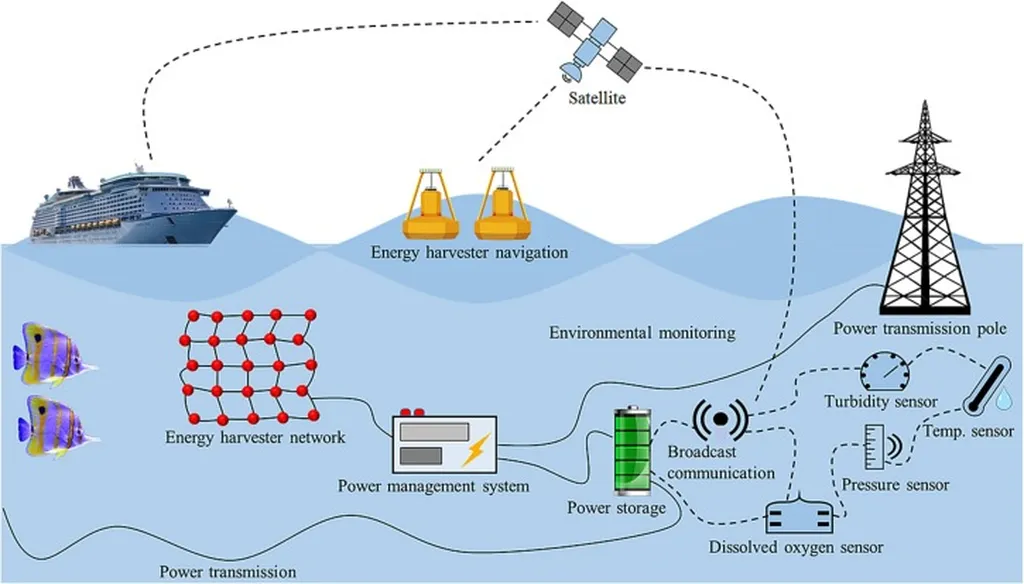
The implications of this research are far-reaching, particularly for the maritime sector. Energy harvesting technologies are crucial for powering sensors, communication devices, and other equipment on ships and offshore platforms. The enhanced efficiency of LPEGs could lead to more reliable and sustainable energy sources for maritime applications, reducing the dependency on traditional power sources and minimizing environmental impact.
Moreover, the use of graphene oxide in the composite material offers additional advantages. Graphene oxide is known for its excellent conductivity, mechanical strength, and flexibility, making it an ideal candidate for enhancing the performance of energy harvesting devices. The integration of AgNPs/GO units not only boosts the electrical output but also ensures the durability and longevity of the devices, which is essential for harsh maritime environments.
As the maritime industry continues to seek innovative solutions for energy efficiency and sustainability, advancements like the NP-LPEG hold promise for a greener and more efficient future. The research conducted by Ha Young Lee and his team represents a significant step forward in this direction, offering a pathway for high-efficiency energy harvesting devices that could transform the way we power maritime operations.
In summary, the integration of AgNPs/GO units into LPEGs has demonstrated a substantial improvement in electrical output, paving the way for more efficient and reliable energy harvesting technologies. This breakthrough could have profound implications for the maritime sector, enabling the development of sustainable and durable power solutions for various applications. As the research continues to evolve, the potential for commercial impacts and opportunities in the maritime industry becomes increasingly evident, highlighting the importance of ongoing innovation in energy harvesting technologies.