
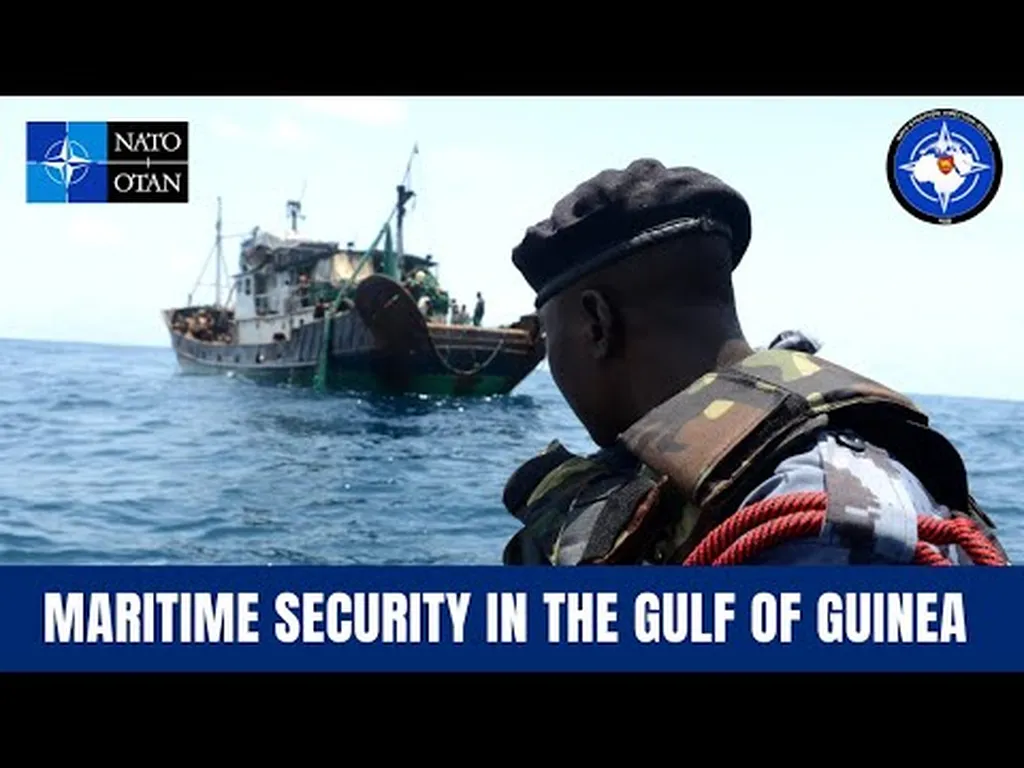
In the vast and often tumultuous waters of the Gulf of Guinea, a new approach to maritime security is making waves. Mikkel Ørum Andersen, a researcher at the Royal Danish Defence College’s Institute for Strategy & War Studies, has been delving into the concept of “communities of practice” (CoPs) as a potential game-changer for regional maritime security governance. His work, published in the Scandinavian Journal of Military Studies, translates to the Scandinavian Journal of Military Studies, offers a fresh perspective on how to tackle the complex security challenges plaguing the region.
So, what exactly are CoPs? Imagine a group of people who share a common interest or profession, regularly interact, and learn from each other to improve their practices. This could be anything from local fishermen sharing knowledge about sustainable practices to naval officers exchanging strategies for combating piracy. Andersen’s research highlights that these communities, both physical and virtual, can serve as powerful mechanisms to bolster maritime security where traditional state-led approaches have fallen short.
The Gulf of Guinea is a hotspot for maritime security threats, ranging from piracy and armed robbery to illegal fishing and environmental degradation. These challenges not only pose significant risks to human life and the environment but also have substantial economic implications. The region is a critical hub for global trade, with its ports facilitating a significant portion of Africa’s maritime commerce. Disruptions to this trade can have ripple effects on the global economy, affecting everything from shipping costs to the price of consumer goods.
Andersen’s research underscores the potential of CoPs to address these issues by promoting collaboration, incorporating local knowledge, and achieving shared regional goals. “Effective CoPs can contribute to the protection of critical infrastructure, sustainable fisheries management, and the improvement of regional cooperation in West Africa,” Andersen explains. This collaborative approach can help fill the gaps left by traditional governance structures, providing a more holistic and adaptive strategy for maritime security.
For the maritime sector, the opportunities are manifold. Enhanced maritime security can lead to more efficient and safer shipping routes, reducing costs and improving trade flows. It can also create new avenues for investment in maritime infrastructure and technology, as well as opportunities for capacity building and knowledge sharing. Moreover, by addressing environmental and humanitarian concerns, CoPs can help ensure the long-term sustainability of the region’s maritime resources, benefiting both local communities and global stakeholders.
However, Andersen’s research also highlights the constraints and challenges associated with implementing CoPs. These include issues related to governance, funding, and the need for sustained engagement and commitment from all stakeholders. “While CoPs offer a promising avenue for strengthening maritime security governance, their success hinges on overcoming these constraints,” Andersen notes.
In conclusion, Andersen’s work provides a compelling case for the potential of CoPs in enhancing maritime security in the Gulf of Guinea. By fostering collaboration and leveraging local knowledge, these communities can help address the complex security challenges facing the region, ultimately benefiting the maritime sector and the global economy. As the world continues to grapple with the interconnected issues of maritime security, sustainability, and economic development, the insights offered by Andersen’s research are more relevant than ever.