
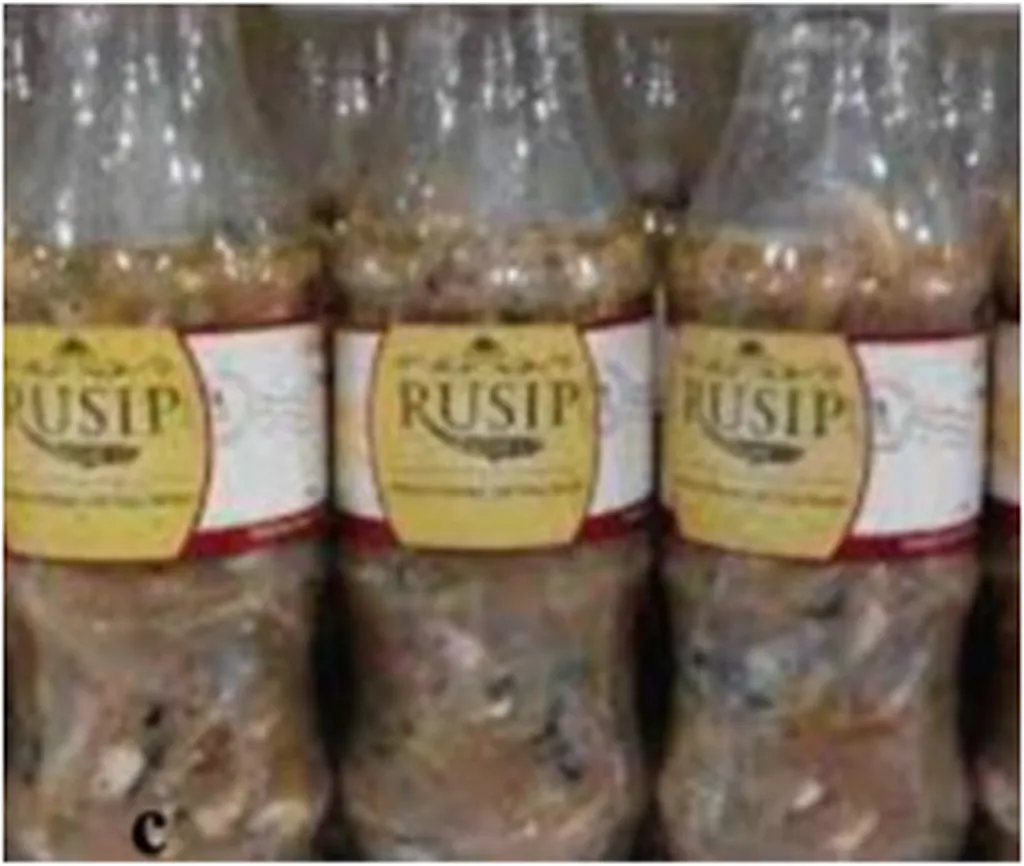
In the bustling world of maritime and food technology, a recent study has shed light on the fascinating process behind Rusip, a traditional Indonesian fermented anchovy product. The research, led by Muhammad Alfid Kurnianto from the Department of Food Technology at Universitas Pembangunan Nasional Veteran Jawa Timur in Surabaya, Indonesia, delves into the microbial and biochemical transformations that occur during the fermentation of Rusip, offering valuable insights for the food and maritime industries.
Fermentation, a process as old as civilization itself, is a cornerstone of food preservation and flavor enhancement. In the case of Rusip, this spontaneous fermentation is driven by indigenous microorganisms, which significantly alter the product’s biochemical composition. The study, published in the journal ‘Applied Food Research’, reveals that fermentation increases titratable acidity, total volatile basic nitrogen (TVBN), soluble protein, and key amino acids like glycine, arginine, and lysine. Additionally, beneficial fatty acids such as methyl myristate and methyl cis-11.14-eicosadienoate are also enhanced.
The microbial analysis conducted by Kurnianto and his team uncovered a shift towards halophilic and salt-tolerant bacteria, notably Tetragenococcus halophilus and Salinivibrio kushneri, as fermentation progresses. This shift is accompanied by a reduction in microbial diversity, a common phenomenon in fermented foods. The study also predicted the enrichment of metabolic pathways related to amino acid metabolism, steroid degradation, and aromatic compound breakdown, indicating the microbial contributions to flavor development and bioactivity.
So, what does this mean for the maritime and food industries? Understanding the microbial dynamics and functional potential of Rusip fermentation opens up new avenues for enhancing the nutritional and sensory qualities of fermented seafood products. As Kurnianto explains, “These findings underscore the pivotal role of microbial metabolism in shaping Rusip’s nutritional and sensory qualities.” This knowledge can be leveraged to improve traditional fermentation processes, ensuring consistency and quality in the final product.
For maritime professionals, this research highlights the potential for value addition to anchovy catches. By optimizing fermentation processes, fishermen and seafood processors can tap into the growing market for fermented seafood products, which are not only delicious but also packed with health benefits. Moreover, the study provides a scientific foundation for targeted microbial management, paving the way for innovative food production practices.
In the words of Kurnianto, “This research provides a scientific foundation for enhancing traditional fermentation processes through targeted microbial management in future research and food production practices.” This is a significant step forward for the maritime and food industries, offering opportunities for innovation and growth in the fermented seafood sector.
As the world continues to seek sustainable and nutritious food sources, the insights gleaned from this study on Rusip fermentation could not be more timely. By harnessing the power of microbial metabolism, we can unlock the full potential of our marine resources, contributing to food security and economic development in coastal communities.