
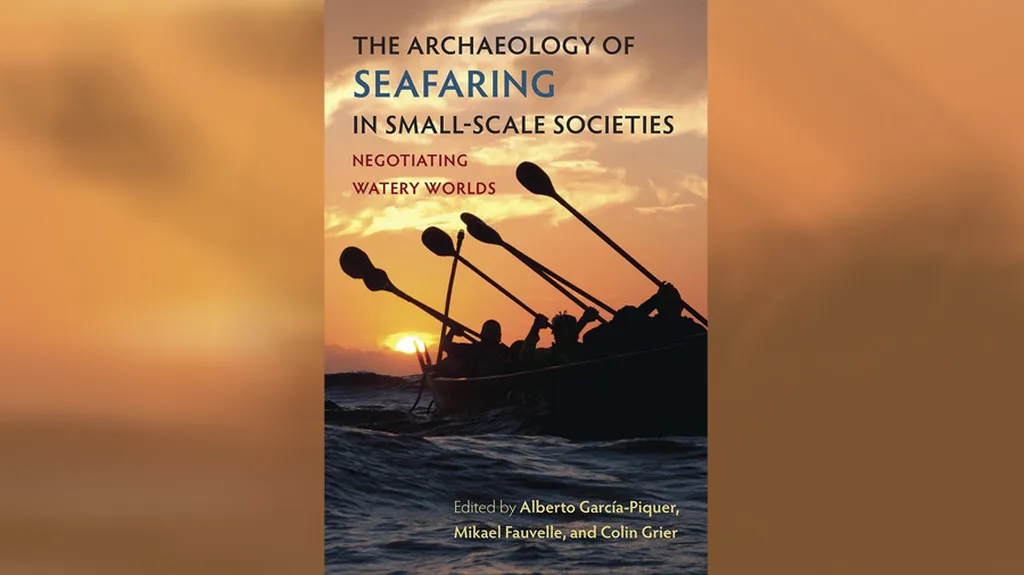
Alberto García Piquer, a researcher at the Department of Prehistory, has co-edited a groundbreaking book that delves into the transformative impact of maritime technology on small-scale societies. “The Archaeology of Seafaring in Small-Scale Societies,” published by the University Press of Florida and supported by Lund University, Sweden, explores how the availability of canoes and small boats became pivotal to livelihoods and social transformation across the globe. This open-access edition, co-edited by García Piquer alongside Mikael Fauvelle from Lund University and Colin Grier from Washington State University, brings together insights from fifteen international experts.
The book examines how maritime technology has historically expanded geographical and social horizons, promoted human mobility, structured social contexts, and even acted as a catalyst for political centralisation. By focusing on small-scale maritime societies—communities reliant on fishing, hunting, gathering, and sometimes horticulture—it highlights the revolutionary role of water vessels in human history.
Drawing on archaeological, historical, and ethnographic evidence, the book addresses a range of topics, including the nautical capabilities of vessels and the humans who operated them, the role of these vessels in resource production and consumption, and the impact of voyage length and difficulty on social dynamics. The authors present case studies from diverse regions, such as settlement patterns in southern South America, whaling by megalithic societies in Brittany, maritime mobility in Baja California, and the transformative effects of canoes on fishermen in Peru. Additionally, the book explores the voyages of Salish communities along the North American coast and the deep connection between Inuit communities and their kayaks and umiaks in the eastern Arctic.
García Piquer and his co-editors conclude that the archaeology of navigation in small-scale societies reveals the intricate interactions that shaped past marine worlds. They advocate for a holistic and comparative approach to studying these topics on a global scale, underscoring the need for a comprehensive understanding of maritime history.
“The Archaeology of Seafaring in Small-Scale Societies” is a testament to the profound influence of maritime technology on human development. As García Piquer notes, “This book is not just about boats and voyages; it’s about how these elements have fundamentally altered human societies, shaping our worldviews, social structures, and even our political landscapes.” The collaborative effort of experts from around the world ensures a rich, multifaceted exploration of a topic that has, until now, been underexplored in its global context.
The book’s availability in an open-access format, supported by Lund University, ensures that its insights are accessible to a wide audience, fostering further research and discussion in the field. As we continue to uncover the complexities of our maritime past, works like this one will be instrumental in guiding our understanding of human history and the enduring impact of seafaring on small-scale societies.