
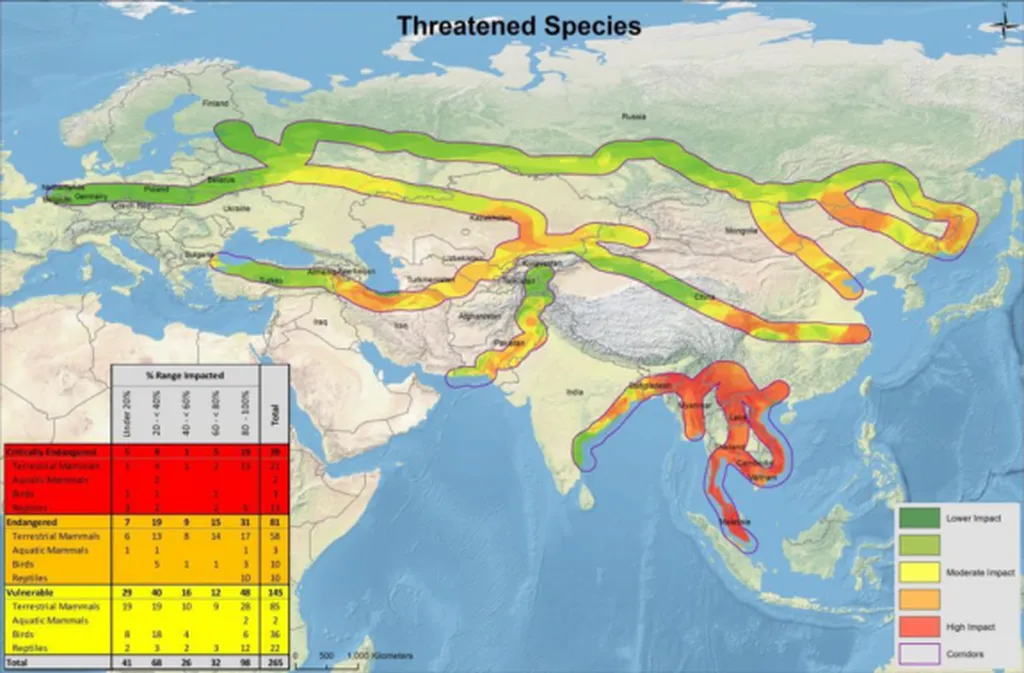
In a recent study published in *Frontiers in Marine Science*, researchers have delved into the economic and environmental impacts of the Belt and Road Initiative (BRI), offering insights that could shape the future of global trade and maritime sectors. Led by Jackson Jinhong Mi from the School of Economics and Management at Shanghai Maritime University, the research employs the Global Trade Analysis Project (GTAP) model to simulate various scenarios of BRI expansion, providing a comprehensive analysis of economic benefits and carbon emissions.
The study focuses on countries currently under negotiation, study, or already accessible within the BRI framework. By constructing a multi-region input–output table, the researchers simulate seven distinct scenarios to assess the economic implications of BRI expansion. The findings reveal that the initiative can significantly improve China’s terms of trade, boost total output and imports, and drive GDP growth. Social welfare is also expected to see a notable uptick.
From a commercial perspective, the maritime industry stands to gain considerably. The expansion of the BRI is likely to increase the output of technology-intensive industries, which could translate into higher demand for specialized shipping services and logistics solutions. Energy-intensive industries are also predicted to see a significant boost, potentially leading to increased freight volumes and new opportunities for maritime transport and port services.
However, the study also highlights the environmental implications. The transfer of carbon emissions from China to other countries is expected to decrease, with the majority of emissions stemming from energy-intensive industries. This shift underscores the need for sustainable practices within the maritime sector to mitigate environmental impact.
Jackson Jinhong Mi emphasizes the importance of these findings for achieving green and high-quality sustainable development within the BRI framework. “The predictions based on model analysis offer theoretical guidance and policy recommendations for the pursuit of green and high-quality sustainable development within the framework of the Belt and Road Initiative,” Mi states.
For maritime professionals, the study underscores the need to adapt to changing trade dynamics and environmental regulations. The expansion of the BRI presents both challenges and opportunities, requiring strategic planning and innovation to capitalize on the growing demand for maritime services while addressing environmental concerns.
Published in *Frontiers in Marine Science*, this research provides a valuable resource for policymakers, industry leaders, and maritime professionals seeking to navigate the complexities of global trade and sustainability in the context of the Belt and Road Initiative.