
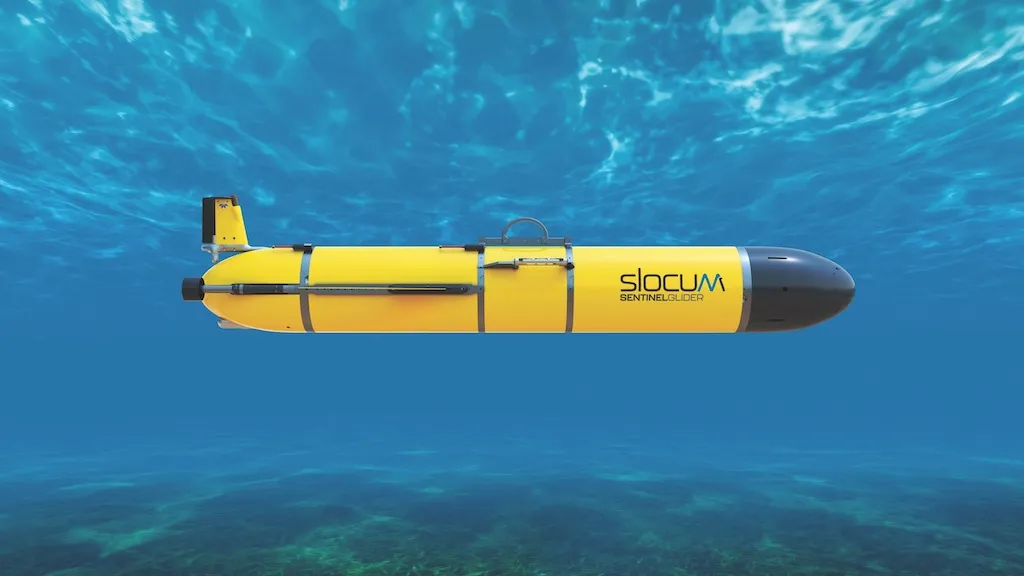
In the bustling, noisy underwater world of the Mediterranean, a silent sentinel has been keeping watch. A wave glider, an autonomous surface vehicle, has been diligently collecting data on marine life and human-made sounds, offering a unique perspective on the state of our seas. This isn’t just any data collection mission; it’s a pioneering effort led by Sara Ferri from the Department of Marine Animal Conservation and Public Engagement at the Anton Dohrn Zoological Station, which is the Stazione Zoologica Anton Dohrn in Italian.
The wave glider, equipped with a single-towed acoustic recorder, was deployed from September 13, 2022, to March 3, 2023. It’s like a high-tech, floating ear, listening in on the underwater symphony. The results? A treasure trove of data, with nearly half of the recordings containing signals from dolphins (Delphinidae), followed by sperm whales (Physeter macrocephalus) and fin whales (Balaenoptera physalus). Hotspots for these marine mammals were found in the southern Tyrrhenian and the Ionian Sea.
But it’s not just about the whales and dolphins. The study also shed light on the pervasive presence of human-made noises, a stark reminder of our impact on the marine environment. As Ferri puts it, “The almost continuous detection of anthropogenic sources highlighted the widespread acoustic impact of human activities in the area.”
So, what does this mean for the maritime industry? Well, it’s a wake-up call. The data collected could be a game-changer for marine conservation efforts and help shape policies to mitigate human impacts on marine ecosystems. For the shipping industry, fishing sector, and marine construction, this is a chance to reassess and reduce noise pollution. It’s an opportunity to innovate and adopt quieter technologies, not just for the sake of the environment, but also to comply with potential future regulations.
Moreover, the use of autonomous vehicles like the wave glider offers a cost-effective, large-scale, and long-term monitoring solution. It’s a tool that could be used by various maritime sectors to keep an ear on the ocean, ensuring their activities are not harming marine life.
The study, published in the journal Scientific Reports, is a testament to the power of passive acoustic monitoring. It’s a promising approach that could support conservation efforts and help us better understand and protect our marine ecosystems. As Ferri notes, “These findings demonstrate the value of passive acoustics in the use of autonomous vehicles as a versatile tool for large-scale and long-term monitoring.”
In the end, it’s about finding a balance. A balance between human activities and the needs of marine life. And with the help of technology and innovative research, we’re one step closer to achieving that balance.