
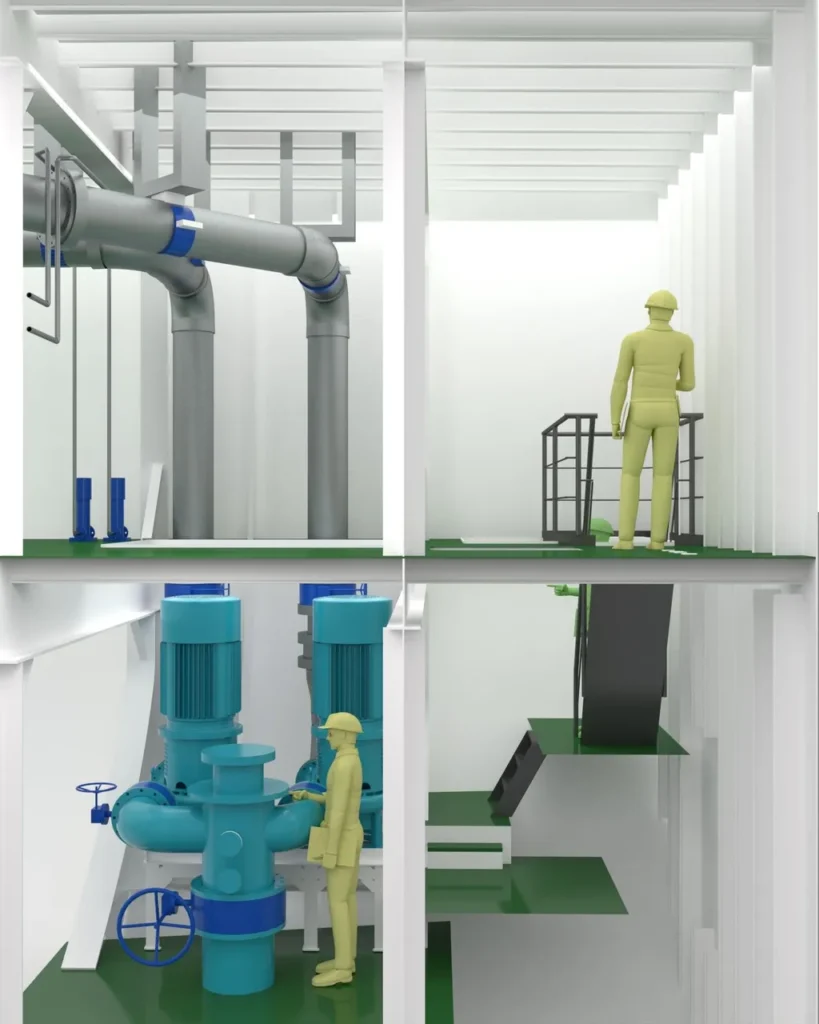
In a significant stride towards enhancing marine environmental protection, researchers have demonstrated the power of 3D laser scanning technology in retrofitting Ballast Water Treatment Systems (BWTS) on existing commercial vessels. This innovative approach, detailed in a recent study published in the Journal of Marine Science and Engineering (or ‘Journal of Marine Science and Engineering’ in English), addresses the pressing global challenge of invasive aquatic species spread through ballast water discharge.
At the helm of this research is Zoe Kanetaki, a mechanical engineering expert from the University of West Attica in Athens, Greece. Kanetaki and her team combined a thorough bibliometric analysis with practical engineering design and on-site supervision to showcase the potential of 3D scanning in maritime retrofitting projects.
The study’s case in point was a crude oil tanker, where the team employed a multi-station 3D scanning strategy across the engine and pump rooms. Using 63 and 45 scan positions respectively, they created high-fidelity point clouds that served as a digital foundation for modeling the vessel’s existing piping infrastructure. This digital twin allowed for precise spatial analysis and accurate retrofitting with an electrolysis-based BWTS.
Kanetaki explained, “By digitally capturing complex onboard environments, we enhance accuracy, safety, and cost-effectiveness in maritime engineering projects.” The results confirmed that 3D scanning minimizes retrofitting errors, reduces installation time, and ensures regulatory compliance with the IMO Ballast Water Management Convention.
The commercial impacts of this research are substantial. Maritime professionals stand to gain from reduced downtime and improved accuracy in retrofitting projects. The transition towards point cloud-based digital twins could become a standard for sustainable and efficient ship conversions in the global shipping industry.
As Kanetaki put it, “This work underscores the transition toward point cloud-based digital twins as a standard for sustainable and efficient ship conversions.” The study not only highlights the environmental benefits but also the economic opportunities for maritime sectors to embrace advanced technologies in their operations.
For maritime professionals, this research opens doors to more efficient and precise retrofitting processes, ultimately contributing to better marine ecosystem health and regulatory compliance. The integration of 3D scanning technology in BWTS retrofitting is a testament to the ongoing evolution of maritime engineering, driven by the need for environmental sustainability and operational excellence.