
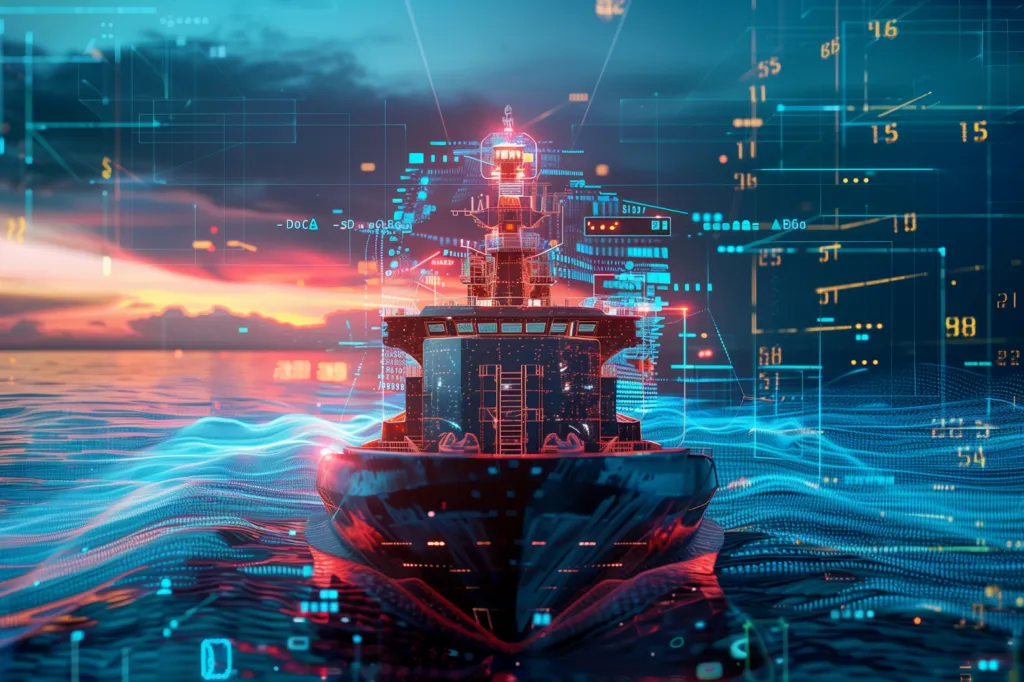
In the ever-evolving landscape of cybersecurity, artificial intelligence (AI) and machine learning (ML) are proving to be game-changers, and a recent study published in the journal ‘Автоматизация технологических и бизнес-процессов’ (translated as ‘Automation of Technological and Business Processes’) sheds light on their transformative impact. The research, led by M. Levinskyi from the NU «Odesa Maritime Academy», explores how AI and ML are revolutionizing network security, particularly in the maritime sector.
Traditional security measures, often reactive and signature-based, are struggling to keep up with the escalating complexity and volume of cyber threats. This is where AI and ML step in, offering proactive and adaptive solutions. As Levinskyi explains, “AI/ML offers potent alternatives by analyzing vast datasets to identify subtle compromise patterns, detect anomalies deviating from normal baselines, and orchestrate autonomous, timely responses to evolving threats with reduced human intervention.”
The study highlights several key applications of AI and ML in network security, including intelligent intrusion detection and prevention systems (IDPS), advanced phishing mitigation, robust malware classification, and behavioral analytics for identifying insider threats and anomalous activities. These advancements are particularly relevant to the maritime industry, where cybersecurity is crucial for protecting sensitive data and ensuring the smooth operation of vessels and ports.
One of the most significant commercial impacts of these technologies is the potential for reduced downtime and improved efficiency. By detecting and responding to threats more quickly and accurately, AI and ML can minimize the disruption caused by cyber attacks. This is especially important in the maritime sector, where even minor disruptions can have significant financial and operational consequences.
Moreover, the study notes that AI and ML can help organizations stay ahead of emerging threats. As Levinskyi points out, “The drive towards Explainable AI (XAI) for trustworthy decisions, and increasingly sophisticated automated security operations (SecOps) indicate a future where AI is fundamentally woven into resilient, adaptive network defenses.” This proactive approach can give maritime companies a competitive edge, enabling them to anticipate and mitigate risks before they become critical issues.
However, the study also acknowledges the challenges and ethical considerations associated with AI and ML. Issues such as data privacy, algorithmic bias, and the need for transparency are all important factors that need to be addressed. As the maritime industry continues to embrace these technologies, it will be crucial to navigate these challenges responsibly and ethically.
In conclusion, the research by Levinskyi and his team underscores the significant potential of AI and ML in enhancing network security, particularly in the maritime sector. By leveraging these technologies, maritime companies can improve their cybersecurity posture, reduce downtime, and stay ahead of emerging threats. As the industry continues to evolve, the integration of AI and ML into network security frameworks will likely become an increasingly important strategic priority.