
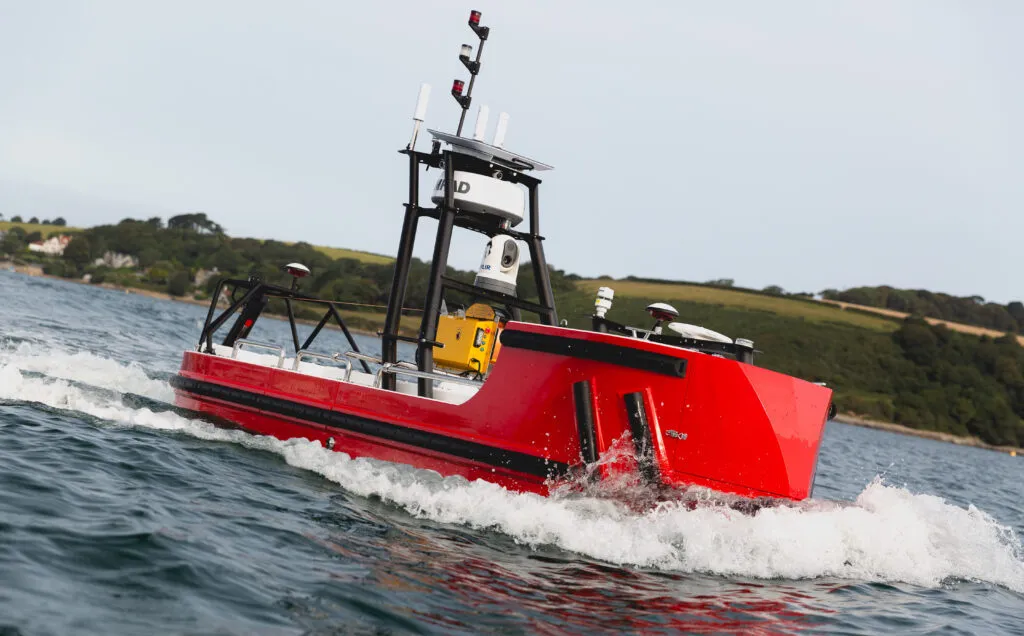
In the ever-evolving world of maritime technology, a significant stride has been made in the realm of autonomous collision avoidance for unmanned surface vessels (USVs). Lixin Xu, a researcher from the Ocean College at Jiangsu University of Science and Technology in China, has published a groundbreaking study in the Journal of Marine Science and Engineering (published in English). The research tackles a persistent challenge in the maritime industry: the efficient and safe navigation of multiple USVs in complex environments.
The study introduces an expert-guided deep reinforcement learning (DRL) algorithm that integrates a Dual-Priority Experience Replay (DPER) mechanism with a Hybrid Reciprocal Velocity Obstacles (HRVO) expert module. In simpler terms, this means the algorithm prioritizes crucial experiences—like near-miss scenarios—to improve learning efficiency and incorporates expert rules to guide the AI’s decision-making process.
Xu explains, “The DPER mechanism prioritizes high-value experiences by considering both temporal-difference error and collision avoidance quality.” This approach accelerates the learning process, reducing training time by a substantial 60.37% compared to traditional DRL methods. Moreover, the integration of the HRVO expert module ensures compliance with the International Regulations for Preventing Collisions at Sea (COLREGs), a critical aspect for any maritime operation.
The commercial implications of this research are vast. As the maritime industry increasingly turns to autonomous vessels for tasks ranging from surveying to security, the need for robust collision avoidance systems becomes paramount. Xu’s algorithm offers a more efficient and safer alternative to existing methods, potentially reducing operational costs and enhancing safety.
“Compared to rule-based algorithms, our proposed algorithm achieves shorter navigation times and lower rudder frequencies,” Xu notes. This translates to fuel savings and reduced wear and tear on vessel equipment, a significant boon for maritime operators.
The integration of AI and expert rules also opens up opportunities for other maritime sectors. For instance, in port management, autonomous tugboats equipped with such algorithms could enhance safety and efficiency in crowded harbors. Similarly, in offshore operations, USVs could navigate more safely around platforms and other vessels.
While the research is a significant step forward, it’s important to note that real-world implementation will require further testing and refinement. However, the potential is undeniable, and the maritime industry watches with keen interest as this technology develops.
As Xu’s research published in the Journal of Marine Science and Engineering (published in English) shows, the future of maritime autonomy is not just about having vessels that can navigate on their own, but about ensuring they do so safely, efficiently, and in compliance with regulations. And with advancements like this, that future seems increasingly bright.