
In the bustling world of smart cities, where data is the new oil, a novel system is making waves, promising to turn the chaotic symphony of citizen interactions into a harmonious melody of reliable intelligence. This isn’t just any system; it’s the Intelligent Multimodal Ticket Processing System (IMTPS), a brainchild of Wei Li from Shanghai Longjing Information Technology Co., Ltd. The system is designed to process heterogeneous data streams from intelligent sensing, particularly crowd sensing data derived from citizen interactions like text, voice, and system logs, into reliable intelligence for sustainable urban governance.
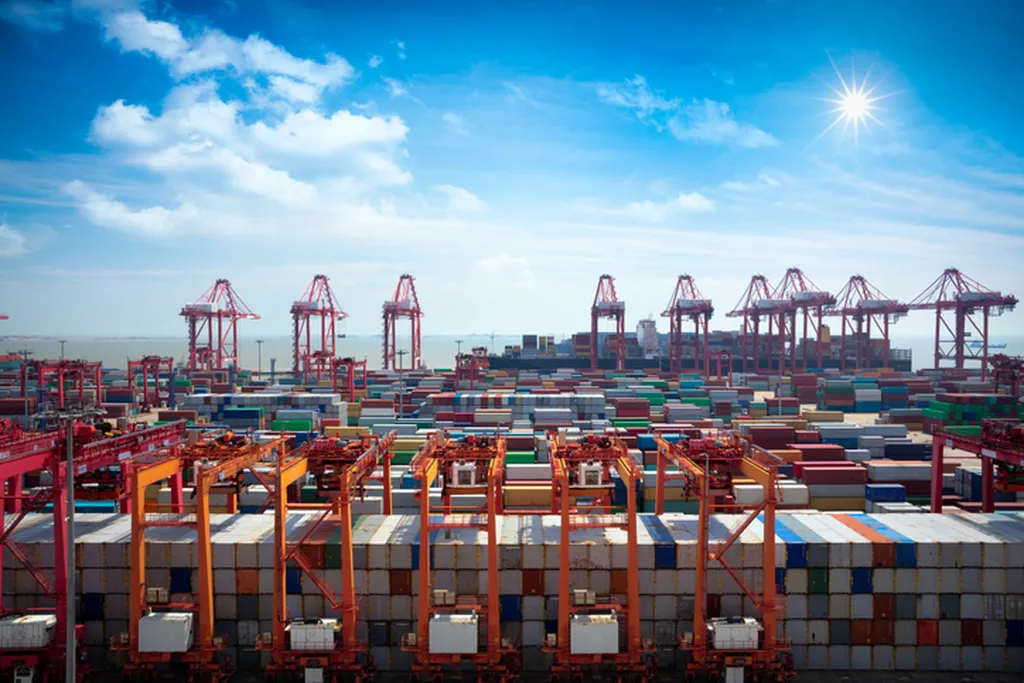
Imagine a busy port city, where ships come and go, and people from all walks of life interact with various services. The data generated from these interactions is vast and complex. IMTPS steps in here, acting like a smart filter and interpreter. It uses a unique blend of Information Theory and Game Theory to efficiently extract and verify information, ensuring that the data is reliable and trustworthy. This is crucial for high-stakes services where accuracy is paramount, like maritime operations and port management.
The system’s architecture is designed to be sustainable and efficient. It uses a compression module guided by Information Theory to reduce data storage and energy costs, which is a significant advantage for large-scale operations like those in the maritime sector. As Wei Li puts it, “The IMTPS compression module achieves provably efficient semantic-preserving compression, drastically reducing data storage and energy costs.”
But IMTPS doesn’t stop at efficient data processing. It also ensures robust reasoning through Causal Inference and Meta-Learning. This means it can distinguish true causality from spurious correlations, enabling trustworthy integration of complex, multi-source urban data. In the context of maritime operations, this could mean more accurate predictions and better decision-making processes.
The system’s adaptive intelligent mechanism allows it to rapidly adapt to new and evolving query patterns. This is particularly useful in dynamic urban environments, where change is the only constant. For the maritime sector, this could translate to better adaptability to changing regulations, market trends, and operational challenges.
IMTPS has been validated on a large-scale, publicly released benchmark dataset of 14,230 multimodal records. The results are impressive, with a 96.9% reduction in storage footprint and a 47% decrease in critical data extraction errors. These results were published in the journal ‘Sensors’, which translates to ‘传感器’ in Chinese.
The commercial impacts and opportunities for the maritime sector are significant. With IMTPS, port authorities and maritime service providers can expect more efficient operations, reduced costs, and improved decision-making processes. The system’s ability to process and analyze complex data streams can lead to better resource management, enhanced security, and improved customer service.
Moreover, the open-sourcing of IMTPS provides a replicable blueprint for building the next generation of trustworthy and sustainable AI-IoT systems. This could spur innovation and collaboration within the maritime sector, leading to the development of new services and solutions that leverage the power of AI and IoT.
In conclusion, IMTPS is a game-changer for smart cities and the maritime sector. Its unique architecture and capabilities offer a robust solution for processing and analyzing complex data streams, leading to more efficient, sustainable, and trustworthy operations. As the world continues to embrace the digital age, systems like IMTPS will play a crucial role in shaping the future of urban governance and maritime operations.