
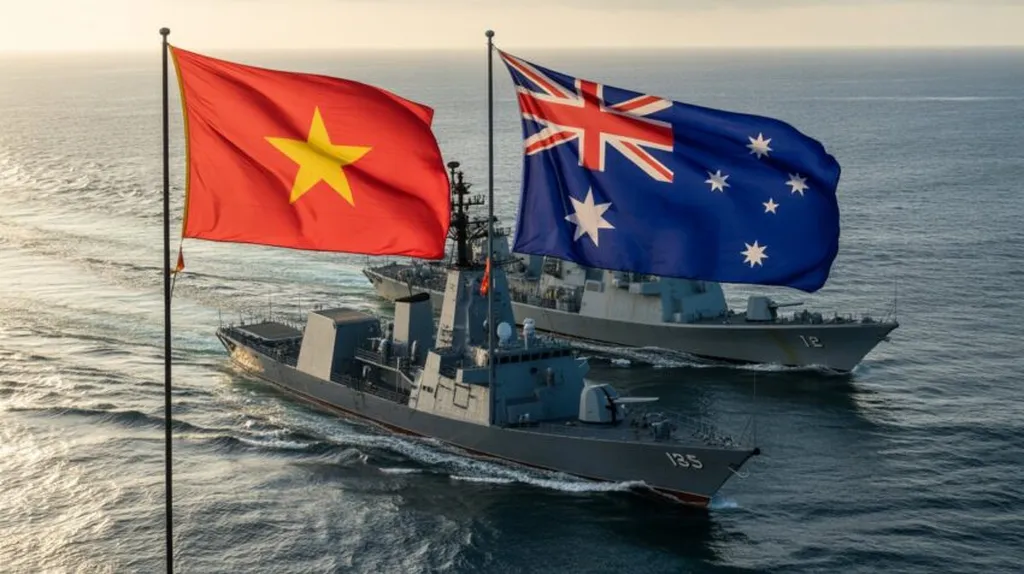
The Việt Nam-Australia naval cooperation is entering a new phase, reflecting the growing depth of collaboration between the two countries’ defence forces. Recent high-level meetings in Hà Nội have underscored the commitment to expand practical engagement under the strategic partnership formally upgraded in March 2024. This renewed focus on cooperation is creating opportunities for both nations to strengthen ties and enhance regional security.
General Nguyễn Tân Cương, Chief of the General Staff of the Việt Nam People’s Army and Deputy Minister of National Defence, hosted Australian Chief of Navy Vice Admiral Mark Hammond. Officials highlighted that Việt Nam continues to prioritise its defence relationship with Australia, emphasizing the importance of advancing joint initiatives and professional exchanges.
Building on a Strong Foundation
The current cooperation is grounded in past agreements that have shaped the trajectory of bilateral defence efforts. The March 2024 upgrade to a strategic partnership created a stronger platform for future collaboration. The 2010 Memorandum of Understanding established the initial framework for structured military engagement, while the 2018 Joint Vision Statement outlined long-term goals and strategies for professional exchanges and operational coordination. These milestones have provided a steady base for the ongoing Việt Nam-Australia naval cooperation, ensuring continuity and the ability to scale collaboration across multiple areas.
Key Areas of Naval Cooperation
Officials have pointed to several high-impact areas where the two navies are working closely together. Delegation visits, including courtesy port visits and leadership exchanges, help build trust and strengthen personal and professional relationships. Shared participation in United Nations peacekeeping missions reflects a commitment to global security responsibilities. Professional exchanges, such as workshops, technical briefings, and knowledge-sharing sessions, improve operational skills and coordination. English-language training programs facilitate smoother communication among personnel from both navies. Service and arms cooperation initiatives between different naval branches improve interoperability and mission readiness.
By combining these approaches, both nations are ensuring that their naval personnel can operate efficiently and effectively together in a variety of scenarios.
Enhancing Multilateral Defence Collaboration
The multilateral defence collaboration between Việt Nam and Australia goes beyond bilateral exercises. Participation in regional forums, such as the ASEAN Defence Ministers’ Meeting Plus, provides a platform to conduct coordinated exercises with other nations in the region, share intelligence and operational insights, and develop regional strategies to strengthen maritime security. These engagements not only reinforce bilateral cooperation but also contribute to a broader regional security architecture, promoting stability across Southeast Asia.
Focus on Search and Rescue Operations
Improving search and rescue operations has become a priority within the naval cooperation framework. Government officials have highlighted initiatives such as coordinated drills to enhance emergency response efficiency, the exchange of best practices to improve readiness during maritime crises, and capacity-building exercises aimed at ensuring rapid and effective humanitarian intervention. Strengthening these capabilities ensures that both navies are prepared to respond to emergencies and safeguard civilians, reinforcing trust between the two nations.
Looking Ahead: Joint Training and Strategic Engagement
Vice Admiral Hammond briefed Vietnamese counterparts on the progress made through recent working sessions, emphasizing that 2026 is poised to be a landmark year for bilateral cooperation. Key areas of focus include enhanced joint training to improve operational readiness, skills, and coordination between naval forces. Delegation exchanges and consultations will deepen dialogue to strengthen mutual understanding and trust. Technology and enterprise collaboration will engage defence enterprises to advance maritime technology, logistics, and operational capacity. Knowledge sharing will capture lessons from exercises and professional exchanges to enhance both navies’ capabilities.
These initiatives reflect the two nations’ commitment to practical collaboration while supporting strategic objectives outlined in the defence partnership.
Promoting Defence Industry Engagement
The Vietnamese government has invited Australian Defence Force and Royal Australian Navy leaders, along with defence enterprises, to participate in the 3rd Việt Nam International Defence Expo. The event aims to facilitate professional and technical exchanges between defence personnel and industry experts, showcase innovations in maritime technology and operational support, and strengthen collaborative solutions that support bilateral and regional security goals. This engagement highlights the understanding that defence cooperation extends beyond exercises to include technology, logistics, and strategic planning.
Strengthening a Lasting Partnership
The Việt Nam-Australia naval cooperation is not limited to operational exercises but encompasses a broad strategy of collaboration, trust-building, and professional development. Future priorities include continuing joint training programs to enhance readiness and interoperability, expanding workshops, technical visits, and professional exchanges, and ensuring coordinated responses for peacekeeping, humanitarian missions, and crisis management. Supporting regional security through continued multilateral defence collaboration and shared maritime strategies will be crucial.
Officials note that these efforts solidify the foundation of a strong, sustainable, and practical defence partnership, benefiting both nations and the broader Southeast Asian region.
The Việt Nam-Australia naval cooperation is a cornerstone of the countries’ strategic partnership, combining professional exchanges, operational coordination, and advanced joint training programs. By prioritising trust-building, search and rescue operations, and multilateral engagement, both nations are strengthening their ability to respond