
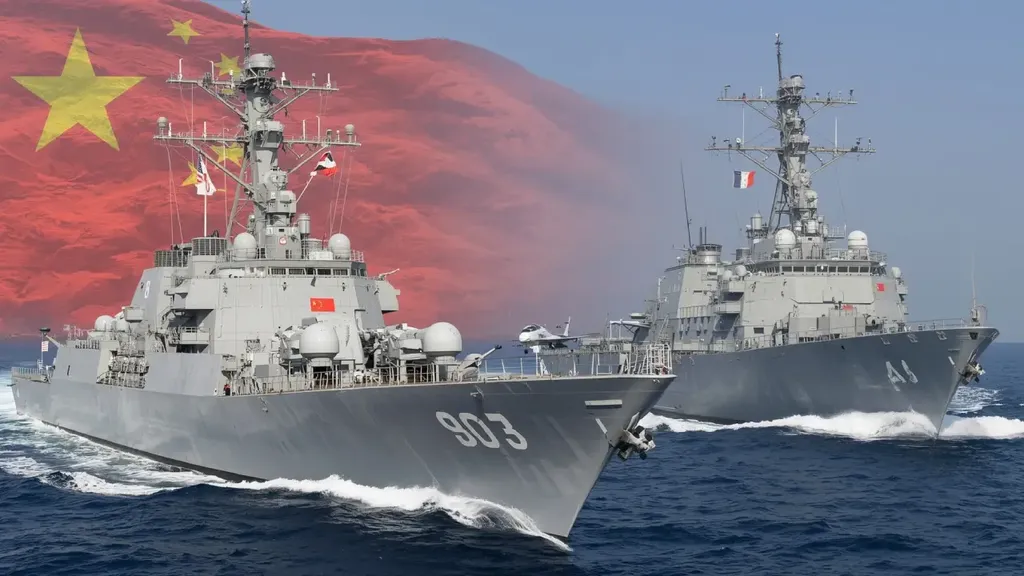
For decades, the U.S. Navy has been the gold standard in naval power, boasting the most advanced platforms and the largest force of professional warfighters. However, between 2015 and 2020, the strategic balance shifted as China surpassed the United States in the total number of battle force ships. While the U.S. Navy still commands the most technologically advanced weapon systems, China is racing to match that attribute as well. The question now is not just about the number of ships or the sophistication of weaponry, but about the human element—operational autonomy, tactical creativity, and innovative thinking.
China’s centralized, politically monolithic command structure struggles to replicate the American excellence in manpower. This is where the U.S. Navy can maintain its edge. To do so, the Navy must prioritize innovation at the individual command level, making it a commanding officers’ imperative. Commanding officers have the authority to manage talent, the responsibility for building command culture, and the ability to support promising concepts. They sit at the critical intersection where innovation can be fostered personally and systemically.
The Navy could provide small-scale discretionary innovation funding to all O-5 commands to enable rapid prototyping. This would encourage innovation throughout the force. As Lieutenant General David Barno and Dr. Nora Bensahel point out, the U.S. outmatched Japan in World War II due to its capacity to “get it right quickly when the moment arrives.” This adaptation gap is crucial for the Navy to maintain today.
Ukraine’s defense against Russia’s invasion further validates the importance of decentralized innovation. Ukraine’s decentralized command and control, combined with a culture of innovation, allowed it to stop a Russian march to Kyiv. While Ukraine’s attributes and innovation-cycle timelines may not be directly applicable to major fleet platforms, the power of a shared innovation culture is a lesson all militaries should take from the Russia-Ukraine War.
The U.S. Navy must foster an innovation culture that encourages independent initiative within strategic boundaries. As observed in a Naval Special Warfare command, a commanding officer’s approach can build a framework that calls for creative development of courses of action and system-challenging ideas. This approach can be cultivated at any command, ensuring that the Navy remains at the forefront of innovation and operational excellence.
In conclusion, while China’s naval expansion and technological advancements pose a significant challenge, the U.S. Navy’s focus on human innovation and decentralized command can preserve its strategic advantage. By prioritizing innovation at the command level and fostering a culture of creativity and adaptability, the Navy can ensure it remains the world’s leading maritime force.