
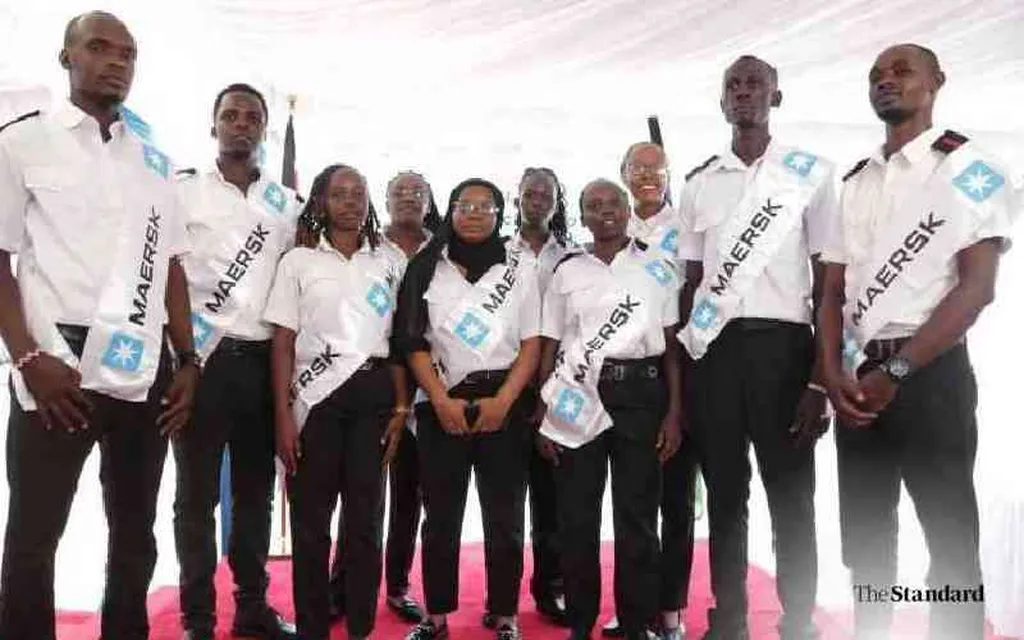
The recent homecoming of four Kenyan maritime cadets at Moi International Airport in Mombasa was more than just a celebratory event—it was a powerful symbol of Kenya’s growing ambitions in the global maritime industry. The cadets, two women and two men, had just completed an intensive training programme at the Korea Institute of Maritime and Fisheries Technology (KIMFT) under the Global Onboard Training Programme, a collaboration between the Bandari Maritime Academy (BMA) and KIMFT. Their return marks a significant milestone, not just for the individuals involved, but for Kenya’s maritime sector as a whole.
Kenya’s coastline stretches over 500 kilometres along the Indian Ocean, yet the country remains largely on the sidelines of an industry that handles over 90 per cent of global trade. The Port of Mombasa is a bustling hub, but the vessels docking there are predominantly crewed by seafarers from the Philippines, India, and Eastern Europe. This disparity highlights a critical need for Kenya to develop its own pool of skilled maritime professionals.
The training programme in South Korea provided the cadets with invaluable technical competencies in shipboard operations, safety management, marine engineering, and professional seamanship. However, the most transformative aspect of their experience was the exposure to international standards and practices. As one cadet remarked, “We learned how to function within multicultural crews, communicate effectively across borders, and internalise the exacting standards demanded by global shipping companies.”
The presence of two female cadets, Belinda Adhiambo Abong and Aisha Mueke Ahmed, is particularly noteworthy. Their success challenges the historical male dominance in the maritime industry and serves as an inspiration for young Kenyan women aspiring to careers at sea. As Abong stated, “Competence at sea is determined by skill and dedication, not gender.”
BMA’s chief executive officer, Dr Eric Katana, has reaffirmed the academy’s commitment to expanding international training opportunities through strategic partnerships. This approach should be emulated across Kenya’s technical training ecosystem. Partnerships with maritime institutions in Norway, Singapore, Japan, and other leading shipping nations could provide more Kenyan cadets with access to world-class training and help strengthen domestic maritime education.
However, scaling up these initiatives will require sustained funding, careful coordination, and long-term institutional support. As independent maritime consultant Andrew Mwangura noted, “Welcoming home four cadets is commendable, but Kenya produces hundreds of maritime graduates annually.” Stronger government backing, deeper private-sector involvement, and a national appreciation of the economic benefits of investing in maritime human capital are essential.
The Indian Ocean economy is expanding, and regional trade is intensifying. The blue economy offers opportunities that Kenya cannot afford to miss due to inadequate workforce preparation. The reception at Mombasa airport should be seen as a beginning rather than an end. These four cadets have shown that Kenyan youth can compete and excel on the global maritime stage when given the opportunity.
The responsibility now rests with policymakers, industry leaders, and training institutions to multiply these opportunities, broaden partnerships, and ensure that many more young Kenyans return home equipped with world-class skills, global experience, and the confidence to build careers at sea. As Mwangura concluded, “The sea has always connected nations and generated prosperity for those bold enough to embrace it. Kenya’s moment to fully claim its maritime future is now.”