
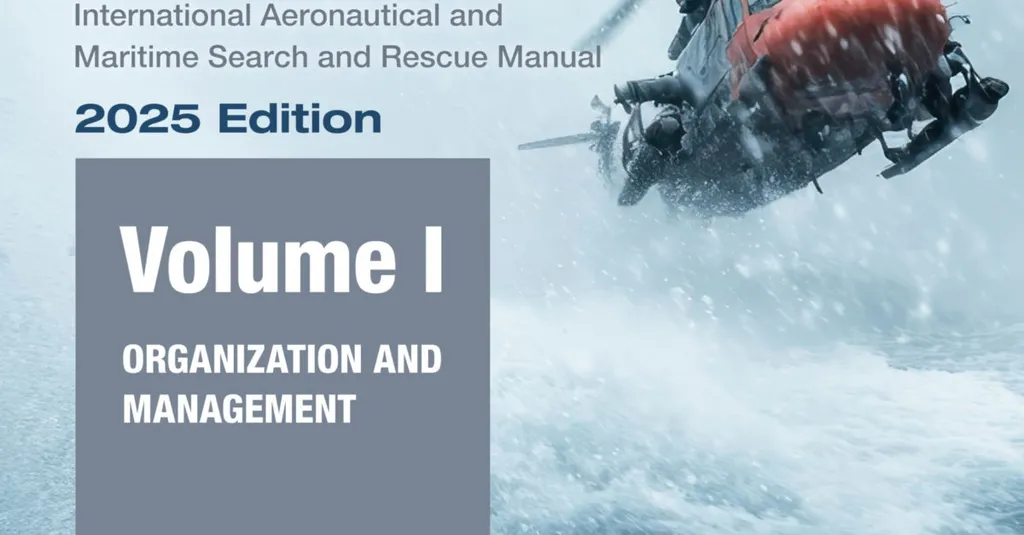
The 2025 Edition of the International Aeronautical and Maritime Search and Rescue (IAMSAR) Manual is more than a procedural update—it’s a critical evolution in how the maritime industry responds to emergencies at sea. With amendments adopted by both the International Maritime Organization (IMO) and the International Civil Aviation Organization (ICAO), this edition brings operational changes that maritime companies, owners, and shipmasters must integrate into their safety systems by January 1, 2026. This isn’t just about compliance; it’s about saving lives.
SOLAS Regulation V/21 mandates that all ships carry an up-to-date copy of IAMSAR Volume III (Mobile Facilities). The 2025 edition must be onboard vessels in hard copy format by January 1, 2026, as stipulated by MSC-MEPC.2/Circ. 2 for emergency use. This isn’t just paperwork; it’s a lifeline. The amendments impact all three volumes of the manual, but Volume III, which contains crucial operational guidance for shipboard personnel, demands immediate attention and training updates.
One of the most significant changes is the alignment with the modernised Global Maritime Distress and Safety System (GMDSS) regulations. The amendments to IAMSAR Manual Volume III correspond directly with the 2024 updates to the GMDSS, ensuring that SAR communication protocols and distress procedures are fully consistent with the modernised system. Crews must familiarise themselves with updated communication methods, distress relay procedures, and the integration of new technologies to ensure seamless communication across all stages of a SAR mission. Review and update your vessel’s Muster Lists, Emergency Response Checklists, and safety management procedures to reflect the revised GMDSS communication protocols as they appear in the new IAMSAR text.
The increase in offshore renewable energy installations introduces unique hazards and coordination challenges for SAR missions. A new dedicated section in Volume II addresses these structures, covering navigation hazards, restricted zones, potential radio communication blockages from large metal structures, and the need for specific communication protocols with installation operators. Vessels operating in or transiting near these complexes must be aware of the specific coordination procedures, safe distances, and potential limitations on traditional search patterns in case of an emergency.
The new edition introduces detailed operational guidance to standardise the use of advanced detection technology, including a new Appendix W (Volume II) for Rescue Coordination Centre (RCC) staff. This guidance focuses on the effective use of Electro-Optic/Infrared (EO/IR) systems and Night Vision Devices (NVDs). While these systems are primarily for aircraft and dedicated SAR units, the ability of vessels to act as an effective On-Scene Coordinator (OSC) or a searching unit requires an understanding of how these advanced assets operate and how the search patterns they employ differ from traditional visual-only searches.
The amendments also address administrative and coordination aspects, primarily in Volume I (Organisation and Management) and Volume II (Mission Coordination), which directly support the efficiency of the SAR system your vessel relies on. A new framework speeds up the approval process, allowing an assisting country’s SAR units to quickly enter the waters of the country coordinating the rescue. Better guidance on accessing flight tracking data helps Rescue Coordination Centres (RCCs) plan searches more efficiently, especially when aircraft are involved. A new sample Memorandum of Understanding (MOU) between SAR services and accident investigation authorities clarifies the handover of information and evidence following an incident, ensuring SAR objectives are met without compromising subsequent investigations.
The 2025 IAMSAR Manual amendments solidify the need for a modern, technologically integrated approach to search and rescue. For maritime companies, the transition should be treated as a readiness project, not just a publication purchase. Procure the new manual immediately to ensure delivery by December 2025. Update shipboard documentation and conduct focused training on the new GMDSS, night search, and offshore installation procedures to significantly enhance emergency readiness, ensuring compliance and increasing the chance of success in critical Search and Rescue missions.