
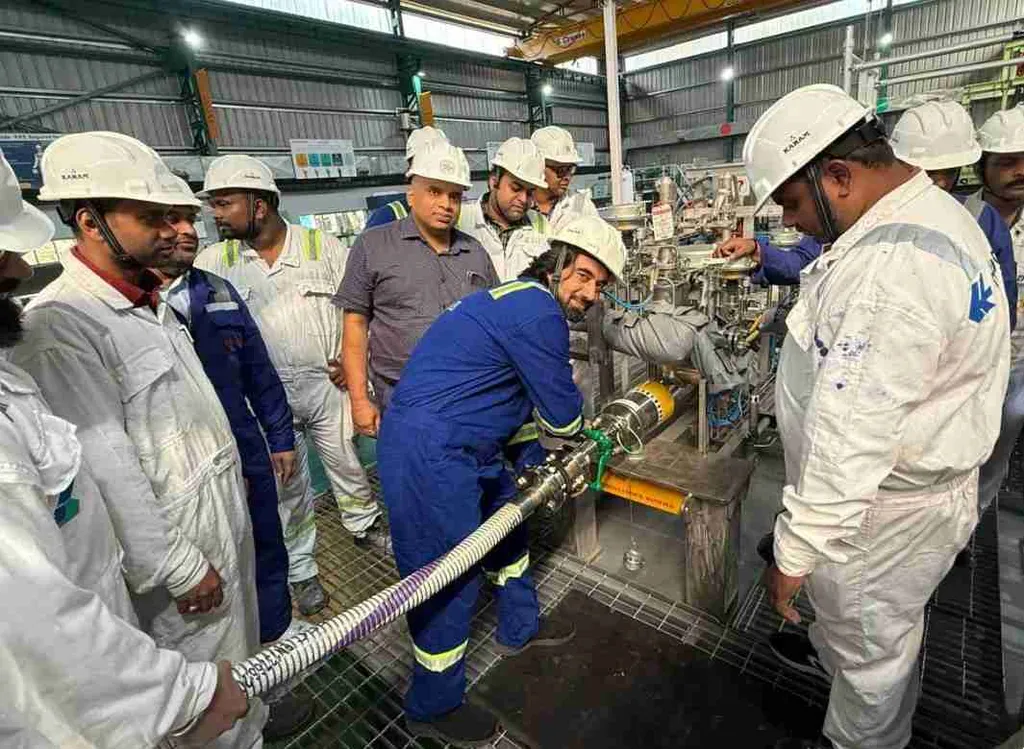
Anglo-Eastern Maritime Training Centre has wrapped up its first pilot training course on ammonia as a marine fuel, marking a significant step as the shipmanager gears up for the arrival of its first ammonia-fuelled vessel. The two-day programme, held on 24–25 November, drew 26 participants from across India, representing a cross-section of shipboard ranks including masters, chief engineers, senior officers, and junior engineers. The diverse cohort mirrored the composition of onboard operational teams, ensuring the training was both practical and relevant.
The course delved into the characteristics, safety protocols, and operational readiness of ammonia fuel, blending classroom instruction with hands-on practice at the Anglo-Eastern Maritime Academy in Karjat. A standout feature was the LNG-ammonia bunkering skid, a simulation facility designed to replicate real-world bunkering operations. This setup included transfer pipelines, safety interlocks, inerting systems, emergency shutdown functionality, gas detection interfaces, and fully operational controls. These features allowed trainees to practice procedures in a safe, controlled environment and simulate emergency scenarios and operational variances.
Anglo-Eastern group director of training Aalok Sharma underscored the importance of the pilot course in preparing for the company’s first ammonia-fuelled ship. “This pilot course is a logical and deliberate step as we prepare to take delivery of our first ammonia-fuelled ship,” Mr Sharma said. He added, “As we navigate our journey toward the successful adoption of a multi-fuel future in the maritime industry, we move forward with both pride and caution.” The course was spearheaded by Anglo-Eastern general manager of training Prasad Nayak and included hands-on bunkering simulations at the academy.
The company plans to build on the pilot course, with feedback from seafarers playing a crucial role in shaping future training programmes for ammonia-fuelled vessels. This proactive approach ensures that the training remains aligned with the evolving needs of the industry and the operational realities of transitioning to alternative fuels.
As the maritime industry steers towards a greener future, initiatives like these are pivotal. They not only prepare the workforce for new challenges but also set a precedent for how training and operational readiness can be seamlessly integrated. Anglo-Eastern’s commitment to a multi-fuel future, underpinned by rigorous training and simulation, highlights the importance of preparation and adaptability in the face of technological and regulatory shifts.