
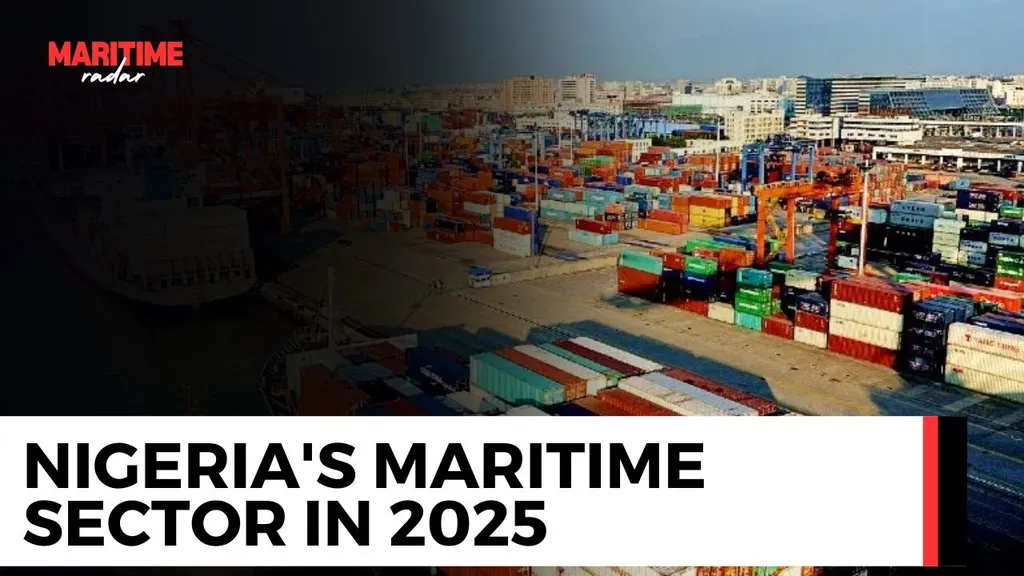
Nigeria’s maritime sector in 2025 marked a year of significant transformation and strategic reforms, showcasing resilience amidst structural challenges. The sector’s advancements were highlighted by investments in port modernisation, digitalisation, human capital development, and fisheries, positioning Nigeria as a competitive continental maritime hub.
A pivotal moment came in November 2025 when Nigeria reclaimed a Category C seat at the International Maritime Organisation (IMO) Council for the 2026–2027 biennium. This victory, secured with 116 votes, ended a 14-year absence and placed Nigeria among nations with special interests in maritime transport and navigation. Minister of Marine and Blue Economy, Adegboyega Oyetola, described this achievement as a “landmark endorsement of renewed global confidence in Nigeria under President Bola Tinubu’s administration.” The IMO seat strengthens Africa’s representation and enables Nigeria to influence global maritime policies, particularly in Gulf of Guinea security, piracy suppression, and maritime capacity-building.
Complementing this, the Nigeria Customs Service (NCS) Comptroller-General, Adewale Adeniyi, was elected Chairperson of the World Customs Organisation (WCO) Council in June 2025. Adeniyi’s leadership, the first for a Nigerian since the WCO’s inception in 1952, underscores Nigeria’s advancements in digitalisation and trade facilitation. His role in chairing the WCO Policy Commission session in Guatemala in December 2025 further solidified Nigeria’s influence in shaping continental trade facilitation standards under the African Continental Free Trade Area (AfCFTA).
Port modernisation and infrastructure upgrades were central to Nigeria’s maritime reforms. The Nigerian Ports Authority (NPA) accelerated programmes, with Dr. Abubakar Dantsoho’s election as Vice President (Africa) of the International Association of Ports and Harbours (IAPH) highlighting global recognition. Extensive dredging and channel expansion at Calabar, Warri, and Burutu ports, deployment of advanced scanners, and implementation of the Unified Customs Management System (UCMS) codenamed B’Odogwu, enhanced cargo handling and reduced turnaround times. The operationalisation of Dangote Refinery’s marine facilities and substantial investments in Eastern ports aimed to decongest Lagos-based facilities. The Lekki Deep Sea Port emerged as a game-changer, processing goods worth nearly $9.3 billion (N13.46 trillion) in the first nine months of 2025, positioning it as Nigeria’s second-largest port by trade value.
Digital transformation extended beyond ports. The Nigerian Shippers’ Council (NSC) launched its Enterprise Content Management System (ECMS) in Abuja, introducing automated workflows, centralised digital records, and real-time task tracking. This initiative aligned with broader sector reforms, including the rollout of inland dry ports and resolution of chronic congestion at Apapa. Regulatory reforms delivered economic impact, with the NSC’s Alternative Dispute Resolution mechanism saving maritime stakeholders over N10 billion in 2025. The Nigeria Customs Service enhanced trade facilitation through the National Single Window platform and the Authorised Economic Operator programme, reducing clearance timelines at Apapa and Tin Can ports from 21 days to 7–10 days for compliant operators.
Maritime agencies under the Ministry of Marine and Blue Economy achieved remarkable revenue growth in 2025. The Nigerian Ports Authority (NPA) surpassed its N1.28 trillion target, recording an actual income of N894.86 billion, with over 70 per cent earmarked for capital projects. The Nigerian Maritime Administration and Safety Agency (NIMASA) projected N774.66 billion, leveraging automation and offshore waste management. The National Inland Waterways Authority (NIWA) exceeded a 200 per cent growth over 2024, driven by Port Development Levies and investments in dredging and vessel acquisition.
Human capital development remained a critical focus. NLNG Shipping and Marine Services Ltd (NSML) inducted 21 Nigerian cadets for UK-based training, while Nigerian shipowners provided over 60 sea-time slots to cadets of the Maritime Academy of Nigeria (MAN), Oron. NSML’s Maritime Centre of Excellence secured UK accreditation for four specialised courses, aiming to become a premier training hub in Africa. At MAN, reforms included the first-ever approved Conditions of Service in 48 years, employment of professional lecturers, and expansion of infrastructure and simulators.
Security improvements were sustained through the Deep Blue Project, achieving a third consecutive year of zero piracy reports. This initiative deployed patrol boats, interceptor vessels, surveillance aircraft, helicopters, drones, and the C4i command