
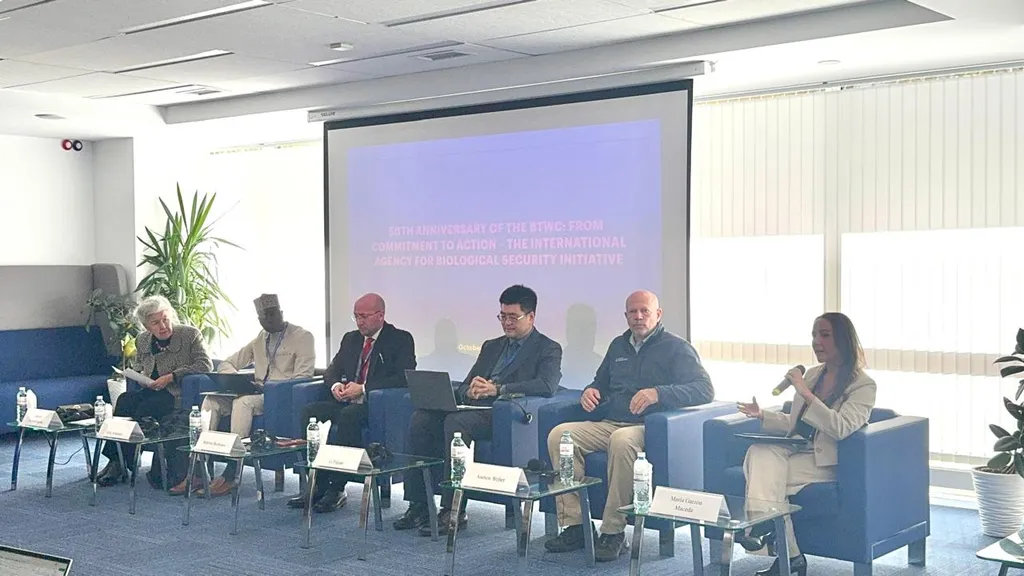
Maritime safety and environmental protection are critical global concerns, and the recent seminar in Almaty, Kazakhstan, underscores the importance of rigorous training and inspection standards in achieving these goals. Co-organized by the OSCE Programme Office in Astana, the Committee of Railway and Water Transport of the Ministry of Transport, and the Kazakhstan Maritime Academy of the Kazakh-British Technical University, the seminar focused on the inspection and accreditation of higher educational institutions and maritime training centres in Kazakhstan.
The seminar, held on 18-19 December, aimed to strengthen oversight in line with the International Convention on Standards of Training, Certification, and Watchkeeping for Seafarers (STCW). This convention sets globally accepted minimum standards for the training, certification, and competence of seafarers, ensuring that ships are operated safely worldwide. As one participant noted, “Maritime safety begins long before a vessel leaves port; it starts in the classroom, where future seafarers are trained to meet international standards.”
Before the STCW, standards varied widely between countries, creating risks to maritime safety and uneven levels of crew competence. The Convention also plays a key role in protecting the marine environment, as competent seafarers are better equipped to prevent pollution and respond effectively to environmental emergencies.
The seminar delved into the strict STCW requirements governing seafarer training, including curriculum development, teaching methodologies, assessment processes, and institutional facilities. Participants gained a comprehensive understanding of how inspections are conducted, the methodologies used for evaluation, and the specific criteria applied during accreditation.
Through in-depth discussions and practical guidance delivered by an international expert, the seminar helped to identify areas for improvement and support the Ministry’s efforts to modernize and adapt its national framework. This initiative represents an important step toward modernizing national inspection systems, strengthening compliance with international standards, and enhancing maritime safety and environmental protection.
The seminar’s focus on practical application and real-world impact is particularly noteworthy. By bringing together key stakeholders—including educators, regulators, and industry experts—the event fostered a collaborative environment where best practices and innovative solutions could be shared. As one expert remarked, “This seminar is not just about theory; it’s about equipping participants with the tools and knowledge they need to make a tangible difference in maritime training and safety.”
The outcomes of the seminar are expected to have a lasting impact on Kazakhstan’s maritime training landscape. By aligning national standards with international best practices, the country is taking a proactive approach to ensuring that its seafarers are well-prepared to meet the challenges of modern maritime operations. This, in turn, contributes to the broader goals of global maritime safety and environmental protection.
In conclusion, the seminar in Almaty highlights the critical role of education and training in maritime safety. By strengthening oversight and adherence to the STCW, Kazakhstan is setting a strong example for other nations to follow. The collaborative efforts of the OSCE Programme Office in Astana, the Committee of Railway and Water Transport of the Ministry of Transport, and the Kazakhstan Maritime Academy of the Kazakh-British Technical University have laid the groundwork for a safer and more sustainable maritime future.