
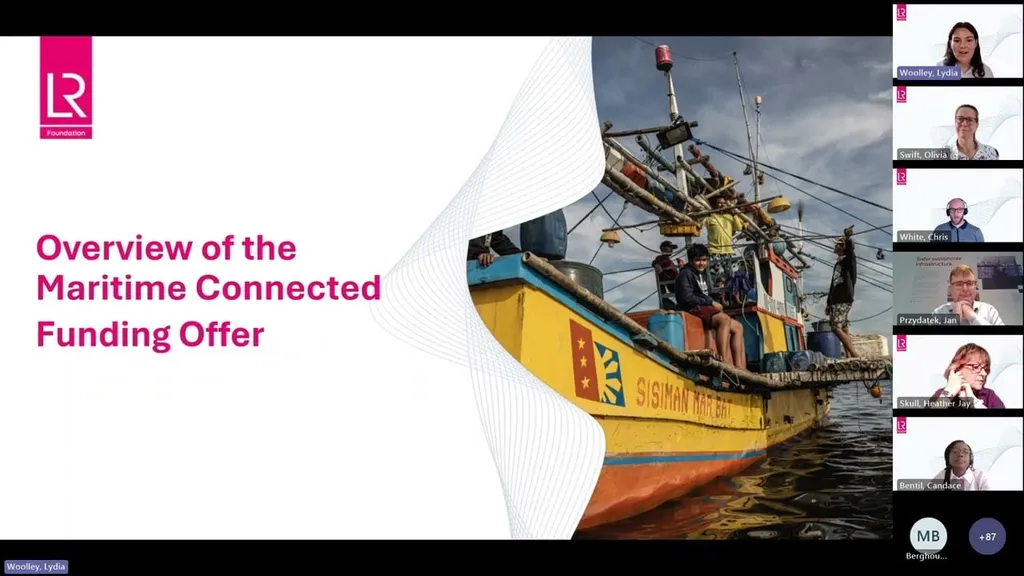
In a bold move to bolster maritime safety across Ghana, Lloyd’s Register Foundation has launched Maritime Connected, a global grant programme designed to tackle the sector’s most pressing challenges. The initiative, which runs until February 6, 2026, is a clarion call to maritime organisations, community groups, NGOs, and training institutions to apply for funding ranging from £2,000 to £60,000. The goal? To foster collaboration, share insights, and co-create solutions that address decarbonisation, digitalisation, climate impacts, and safety at sea.
The Foundation’s realisation that isolated projects often miss vital insights has sparked this initiative. By connecting organisations and leveraging local expertise, Maritime Connected aims to create a network where safety challenges are shared, and solutions are co-created. This collaborative approach is not just about funding projects; it’s about building a global safety net that learns from and adapts to local realities.
Candace Bentil, Programme Manager at Lloyd’s Register Foundation, underscores the importance of connecting different maritime stakeholders. “When we connect people and roles, from engineers and operators to policymakers and researchers, we create opportunities for collaboration that wouldn’t otherwise exist,” she says. Bentil highlights that integrating systems and data can uncover patterns and develop solutions that prevent accidents before they occur. She adds, “Ideas and lessons learned from Ghana and the discoveries of what works in one part of the world can strengthen safety everywhere.”
Maritime Connected is more than just a funding initiative; it’s a platform for amplifying underrepresented voices in global maritime discussions. It encourages applications from women, coastal communities, and small maritime enterprises, giving them a chance to shape global solutions. The initiative supports activities such as knowledge sharing across countries or communities, building local safety skills, and cross-organisation collaboration.
In Ghana, the maritime sector faces numerous safety challenges, including climate change impacts on coastal infrastructure, sustainable transition to cleaner marine fuels, and improving safety standards for small-scale fishing communities. Maritime Connected offers opportunities for Ghanaian organisations to address these challenges through funded projects. The initiative aligns with the Foundation’s mission to support engineering-related education, training, and research, focusing on engineering a safer world through evidence, influence, and change.
Bentil encourages all local organisations, regardless of size, to apply. She emphasises that the Foundation values grassroots perspectives and lived experiences that can inform global maritime safety approaches. “We acknowledge that global maritime safety initiatives must be built with local leadership, not simply delivered to local communities,” she states.
For maritime organisations in Ghana seeking to address safety challenges through collaborative projects, Maritime Connected offers a unique opportunity. It provides access to international funding, connects with global maritime safety networks, amplifies local knowledge to international audiences, builds organisational capacity in safety management, and contributes to shaping global maritime safety standards.
As the deadline for applications approaches, the maritime community in Ghana is encouraged to seize this opportunity. By applying to the Maritime Connected grant, organisations can play a pivotal role in shaping the future of maritime safety, not just in Ghana, but across the globe. The application process is straightforward, with all details available on the Lloyd’s Register Foundation’s website. The time to act is now, and the potential impact is immense.