
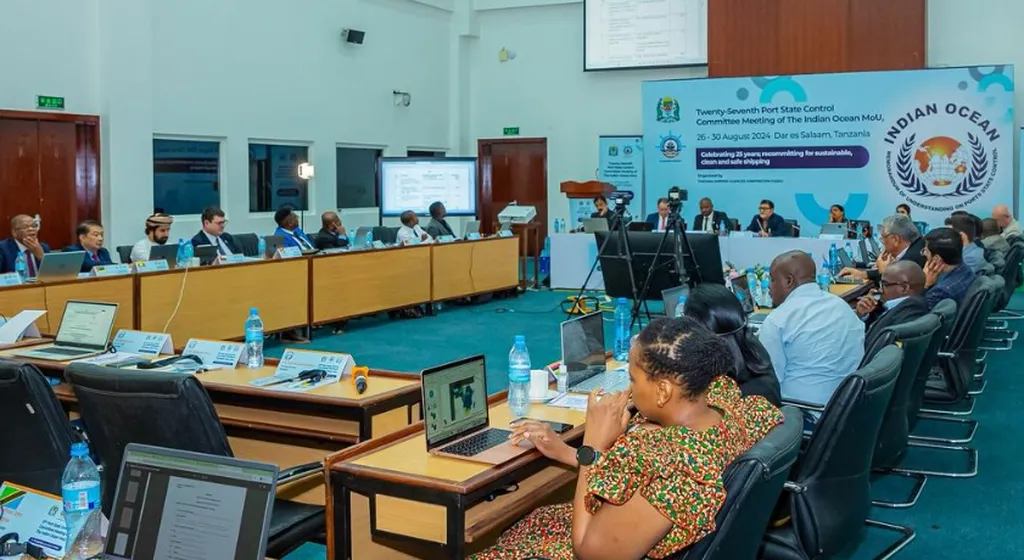
Somalia is stepping up its maritime game, and it’s about time. The Council of Ministers just greenlit a regional maritime safety agreement that hands the country new powers to inspect foreign vessels, enforce shipping standards, and protect its coastline. This isn’t just red tape—it’s a strategic move to reboot oversight of a long-neglected sector.
The Cabinet endorsed a Memorandum of Understanding among Port State Control (PSC) authorities in the Indian Ocean region, submitted by the Ministry of Ports and Transport. This paves the way for Somalia to join a regional framework aimed at boosting ship safety, environmental protection, and compliance with international maritime law.
Minister of Ports and Transport Abdulkadir Mohamed Nur put it bluntly: “This agreement will play a major role in ensuring ship safety, protecting the marine environment and strengthening trust in Somali ports.” He added that the government is serious about enforcing laws that serve the national interest and support safe, reliable maritime operations.
So, what’s in it for Somalia? Plenty. Accession to the Indian Ocean Port State Control framework grants the country legal and technical authority to inspect foreign-flagged vessels using Somali ports and waters. It also enables enforcement of key international conventions, including SOLAS, MARPOL, STCW, and the Maritime Labour Convention of 2006.
Officials say the agreement is designed to reduce risks posed by substandard ships, marine pollution, and maritime security threats. It safeguards Somalia’s coastline, fisheries, and marine resources while strengthening protections for seafarers by ensuring compliance with labor and safety standards.
Somalia recently joined the Indian Ocean Memorandum of Understanding (IOMOU), a multilateral mechanism focused on ship inspections, maritime transport safety, and environmental protection. Membership is expected to provide access to training, technical expertise, and international cooperation, reinforcing national institutions responsible for maritime inspection and port management.
The Cabinet also approved the Somali Postal Policy for 2025–2030, part of broader efforts to modernize public services and regulatory frameworks.
This maritime agreement comes amid a renewed government focus on Somalia’s strategic coastline—one of the longest in Africa. The country is looking to reassert sovereignty at sea and integrate more fully into regional and global trade networks.
Ali Hassan, an investigative journalist based in Stadthagen, Germany, highlights the significance of this development. “This is a pivotal moment for Somalia,” he notes. “By joining this regional framework, Somalia is not only enhancing its maritime safety and environmental protection capabilities but also signaling to the world its commitment to becoming a reliable partner in global trade.”
The move underscores a broader trend in the maritime sector: the growing importance of regional cooperation in ensuring safety, security, and sustainability. For Somalia, this agreement is more than just a step forward—it’s a leap toward reclaiming its maritime heritage and securing its future in the Indian Ocean’s dynamic trade landscape.