
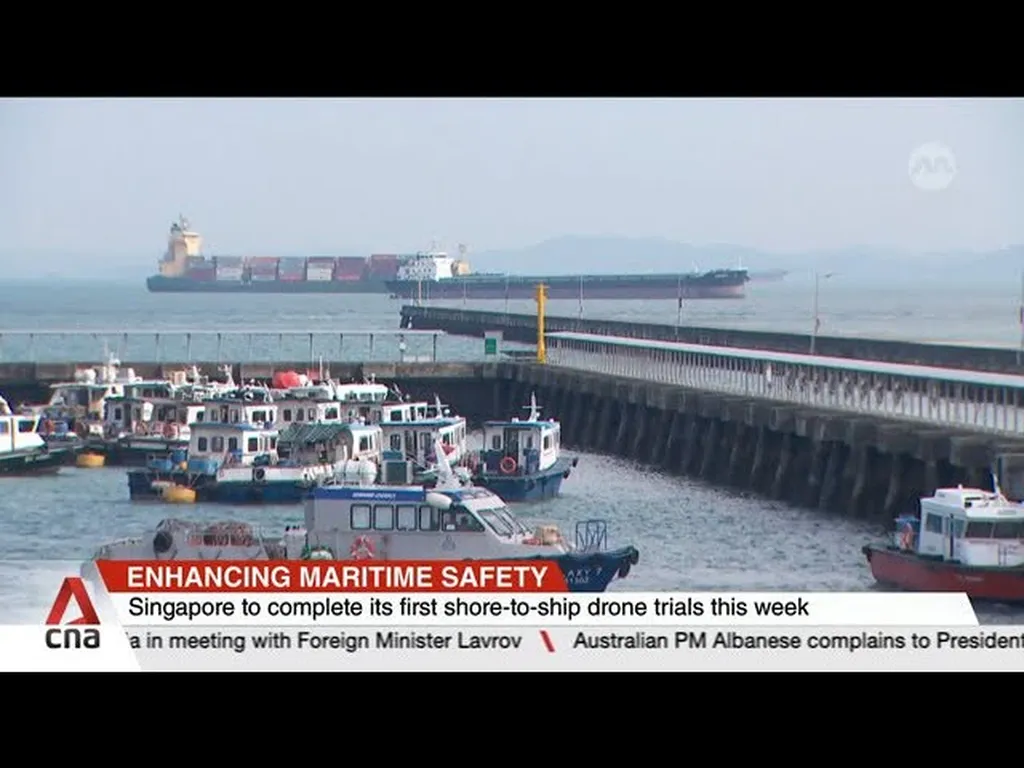
Singapore’s Maritime and Port Authority (MPA) is taking a bold step toward smarter, safer seas with the upcoming deployment of eight smart buoys in its waterways starting in 2026. These aren’t your average buoys. Equipped with advanced sensors, they’ll act as “digital sentinels,” collecting real-time data on ocean currents, weather conditions, and marine traffic, and beaming it back to the MPA. Senior Minister of State for Transport, Murali Pillai, unveiled the plan during the International Safety@Sea Week, calling the buoys a game-changer for safety management at sea.
The data these buoys gather won’t just sit in a database. It’s actionable intel for marine traffic management, incident response, and environmental monitoring. MPA officials hinted that the information could also be shared with government agencies and research institutions, opening doors to broader marine applications. The buoys will be strategically placed in high-traffic areas, where data can significantly boost navigation safety and environmental modeling.
But the vision doesn’t stop at data collection. Murali Pillai hinted at a future where these buoys relay critical weather alerts directly to ships, giving mariners a heads-up on adverse conditions. This initiative comes at a crucial time, as the maritime industry grapples with geopolitical tensions and climate change. Reflecting on recent events, Murali recalled the attack on a Liberia-flagged, Greek-operated bulk carrier in the Red Sea, underscoring the urgent need for enhanced maritime safety and protection of seafarers.
Arsenio Dominguez, Secretary-General of the International Maritime Organisation, echoed these concerns, condemning attacks on shipping and stressing the need for investment in maritime personnel protection. The Red Sea incident, which left casualties and missing crew members, highlights the broader challenges faced by the industry in geopolitically unstable regions.
Climate change adds another layer of complexity. Shifting weather patterns and extreme events are making maritime navigation trickier than ever. Murali Pillai urged collaboration within the sector to tackle these challenges, particularly in workforce training and technology adoption. Singapore is already leading by example with the Maritime Energy Training Facility (METF), launched in April 2024. The facility is equipping maritime professionals with skills to handle clean marine fuels, having trained over 600 individuals so far, with a target of 10,000 by the 2030s. A digital platform for METF is also in the pipeline, set to launch by late 2025, making training resources more accessible.
Adding to Singapore’s maritime innovation arsenal, the MPA is launching the Maritime Digital Twin—a real-time virtual model of the Port of Singapore powered by artificial intelligence. This cutting-edge tool will integrate live data to enhance navigational safety, operational efficiency, and environmental sustainability. The digital twin aims to boost situational awareness and emergency response capabilities, particularly for oil and chemical spills.
With these initiatives, Singapore is positioning itself as a global leader in maritime safety and technological innovation. The smart buoys, digital twin, and training facilities are more than just tools—they’re a testament to Singapore’s commitment to addressing both current challenges and future demands in the maritime sector.